Voltage Stability of Capillary Electrophoresis High-Voltage Supply in Environmental Hormone Screening
Voltage stability of a capillary electrophoresis high-voltage supply determines the reliability of environmental hormone screening. Environmental hormone analysis detects trace levels of endocrine-disrupting compounds in water, soil and food samples, and capillary electrophoresis separates the analytes according to the mobility of the analytes under an applied electric field. The separation voltage defines the migration time and the resolution, and any fluctuation of the voltage changes the migration velocity and the peak position. A supply with high voltage stability supports the reproducible detection of these trace compounds.
The first requirement is the accuracy of the separation voltage. The supply delivers the defined potential across the capillary, and the set-point accuracy determines the repeatability of the migration time from run to run. The calibration of the supply is traced to the voltage reference, and the drift of the output is minimized by the temperature compensation of the regulation circuitry. The verification of the actual voltage at the capillary confirms that the separation conditions are correct.
The second requirement is the low noise of the output. The baseline noise of the electropherogram is influenced by the ripple of the separation voltage, and a noisy supply limits the detection sensitivity. The filtering and the shielding reduce the ripple and the high-frequency noise, and the construction avoids the coupling of the switching interference into the separation circuit. The low-noise output enables the detection of the weak signals from the trace analytes.
The third requirement concerns the stability over the analysis time. The separation of the complex samples takes a defined period, and the voltage must remain constant during this period to produce sharp peaks. The regulation loop holds the output against the temperature changes and the load variations, and the reference elements are selected for the long-term stability. The recorded voltage profile for each run supports the quality assessment of the analysis.
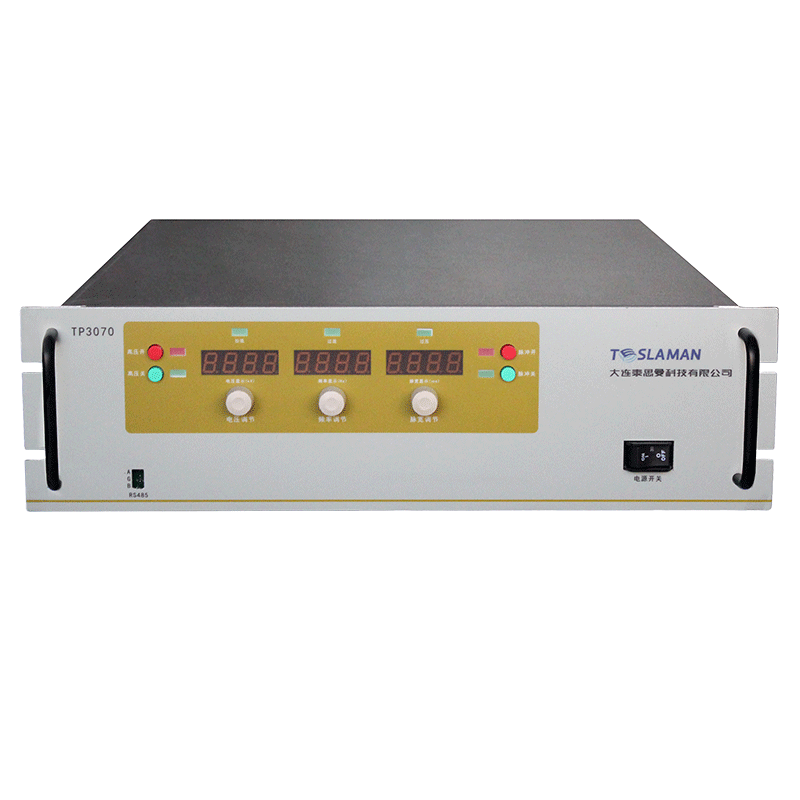
The control architecture combines the precise regulation with the process management. The supply provides the voltage for the injection and the separation steps, and the timing of these steps is coordinated with the detection system. The current monitoring detects the changes in the capillary condition, and the protection responds to the abnormal conditions without disturbing the analysis. The communication interface connects the supply to the instrument control software.
Safety design follows the requirements of high voltage in an analytical environment. The high-voltage section is enclosed and interlocked, so that the operator is protected during the operation. The discharge path removes the stored energy after the analysis, and the fault protection covers the overvoltage and the overcurrent conditions. The status indication and the documentation support the safe use of the instrument.
Verification covers the voltage accuracy, the noise and the stability. The output is measured with calibrated instruments over the operating range, and the noise is evaluated with the appropriate measurement bandwidth. The stability is assessed over the analysis time and the temperature range, and the results are compared with the specification. Acceptance testing includes the separation of a reference mixture to confirm the analytical performance.
Integration with the capillary electrophoresis instrument follows the defined interfaces. The supply is connected to the electrode assemblies and the safety circuits, and the timing of the voltage application is synchronized with the injection and the detection. The grounding arrangement avoids interference between the power stage and the detection electronics, and the cabling is shielded to preserve the signal quality. Commissioning verifies the complete analytical system.
The application value appears in the confidence of the screening results. A stable separation voltage produces reproducible migration times, which is essential for the identification of the compounds in the complex samples. The low-noise output supports the detection of the trace concentrations that are relevant for the environmental assessment. The reliability of the supply reduces the number of failed runs and the associated re-analysis, improving the throughput of the screening laboratory.
Maintenance focuses on the components that affect the voltage accuracy and the noise. The divider, the regulation circuitry and the shielding are inspected at defined intervals, and the calibration is verified against the reference. The recorded run data support the detection of slow changes in the voltage behavior. Spare modules for the critical sections reduce the downtime during a failure.
The analytical workflow of the screening laboratory depends on the stability of the instrument conditions across the whole sequence of samples. The migration time of the known standards establishes the identification window for the analytes, and the consistency of the separation voltage keeps this window valid throughout the batch. When the supply drifts, the peaks shift outside the window and the analysis must be repeated, which reduces the throughput and delays the reporting of the results. The supply therefore contributes directly to the efficiency of the screening service and to the timeliness of the environmental assessment.
The verification of the screening method includes the evaluation of the repeatability and the reproducibility of the measurements. The repeatability within a run and between the runs depends on the voltage behavior of the supply, and the documented performance supports the method validation. The laboratory quality system records the supply calibration and the run data, providing the evidence for the audits. This combination of stable hardware and documented practice maintains the confidence in the screening results and supports the acceptance of the analytical data by the regulatory bodies.
The integration of the supply with the laboratory information system completes the data chain of the screening process. The run records, the quality control results and the supply parameters are stored together, and the automatic evaluation flags the runs that deviate from the expected behavior. This integrated view supports the continuous monitoring of the analytical quality and the early detection of the developing problems.
Development continues toward higher sensitivity and greater automation. Improved filtering and shielding reduce the noise further, supporting the detection of even lower concentrations. The integration of the supply with the data system allows the automatic quality control of each run, and the digital records support the compliance of the screening laboratory. The capillary electrophoresis high-voltage supply will continue to evolve with these capabilities, supporting the environmental hormone screening in routine laboratories.