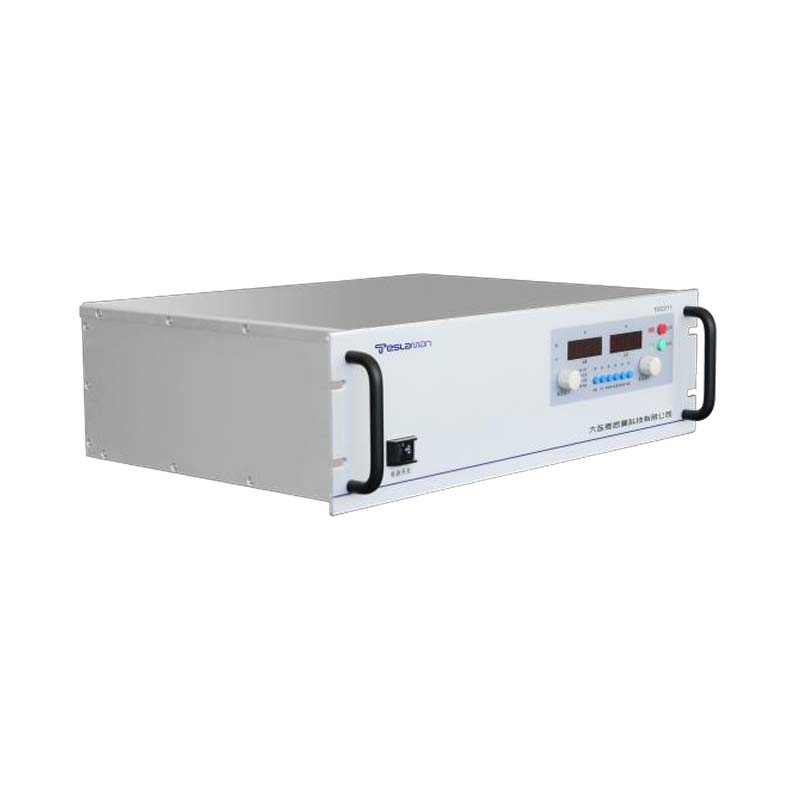
High-Voltage Pulse Power Technology for Instantaneous High-Power Discharge in Industrial Electrostatic Applications
High-voltage pulse power technology enables instantaneous high-power discharge in a range of industrial electrostatic applications. Processes such as electrostatic precipitation, pulsed electric field treatment and surface charging require delivery of large instantaneous power in short pulses. The pulse power supply accumulates energy over time and releases the stored energy rapidly into the load. Engineering this discharge capability determines process effectiveness and energy efficiency. The technology addresses pulse amplitude, duration and repetition rate control.
Energy storage forms the foundation of pulse power systems. Capacitors store electrical energy during the charge phase and release the stored energy during discharge. The storage bank size and configuration define the deliverable pulse energy. The supply charges the storage bank efficiently between pulses. Storage component selection balances energy density and lifetime.
The discharge switch controls the release of stored energy into the load. Switching elements must handle high voltage, high current and fast transition times. Solid-state switches offer precise control and long life compared to older technologies. The supply integrates switching with timing control. Switch reliability determines system availability.
Pulse waveform characteristics influence process outcomes. Amplitude, duration and rise time define the electric field conditions applied to the load. Different processes require different pulse profiles. The supply generates tailored waveforms through circuit design. Waveform flexibility supports diverse applications.
Electrostatic precipitation removes particulate matter from industrial gas streams. Charged particles migrate to collection electrodes under the applied field. Pulsed energization improves collection efficiency for high-resistivity dust. The pulse supply enhances precipitation performance. Energy savings result from optimized pulse patterns.
Pulsed electric field treatment applies brief high-voltage pulses to liquid products. This technique inactivates microorganisms in food and beverage processing. The pulse parameters determine treatment efficacy. The supply delivers the required field strength across the treatment chamber. Industrial scale-up demands reliable pulse power.
Surface charging applications use pulsed corona to treat materials. Corona discharge modifies surface properties such as wettability and adhesion. The pulse supply generates consistent corona conditions. Treatment uniformity depends on discharge stability. Process control maintains consistent surface effects.
Pulse repetition rate determines process throughput. Higher repetition rates increase treatment speed but raise average power and thermal load. The supply manages the trade-off between rate and reliability. Cooling systems handle the resulting heat. Optimization matches repetition rate to process requirements.
Impedance matching between the supply and the load maximizes energy transfer. Load impedance varies with process conditions and geometry. The supply adapts through matching networks and circuit design. Mismatch causes reflected energy and reduced efficiency. Adaptive matching improves system performance.
Diagnostics monitor pulse parameters for process and equipment health. Pulse amplitude, duration and count are recorded. Drift in pulse characteristics indicates component degradation. Predictive maintenance addresses developing issues. Data logging supports quality assurance.
Safety in pulse power systems requires rigorous design. Stored energy poses shock and burn hazards. Interlocks prevent access to charged components. Discharge circuits drain residual energy before maintenance. Safety certification validates the protection architecture.
Electromagnetic compatibility of pulse power systems demands careful management. Fast high-current pulses generate substantial emissions. Shielding and filtering contain interference. The supply must operate near sensitive control electronics. EMC qualification verifies system compatibility.
Reliability under continuous pulsing requires robust component selection. Capacitors undergo repeated charge-discharge cycling. Switching devices experience high stress. Thermal management maintains component temperatures within limits. Lifetime testing validates durability.
Energy efficiency of pulse power systems affects operating cost. Efficient charging circuits reduce losses between pulses. Regenerative approaches recover some discharge energy. Efficiency optimization lowers power consumption. Economic analysis guides design choices.
Modular pulse power architectures scale capacity to application needs. Multiple modules combine for higher power or redundancy. Standardized modules simplify maintenance. Expansion follows demand growth. Modularity improves system flexibility.
Integration with process control systems enables automated operation. The supply communicates pulse parameters and status. Recipe management stores application settings. Synchronization with production lines supports inline processing. Data exchange enables process optimization.
Research into advanced pulse power explores new switching devices and circuit topologies. Wide-bandgap semiconductors enable faster, more efficient switching. Solid-state solutions replace aging technologies. Collaborative development advances the field. Publication of results supports technology adoption.
Training programs cover pulse power fundamentals and system operation. Understanding of pulse effects on processes enables effective use. Documentation supports consistent operation. Certification validates operator competence. Continuous learning addresses technology evolution.
In summary, high-voltage pulse power technology delivers instantaneous high-power discharge for industrial electrostatic applications through energy storage, fast switching and waveform control. Pulse capability, reliability and efficiency determine process effectiveness across precipitation, treatment and charging applications. Continued advancement in pulse power will expand industrial application possibilities.
Load characterization defines the impedance presented to the pulse supply. Treatment chamber geometry and process medium determine load properties. The supply design accommodates the expected load range. Characterization data guides circuit design. Accurate characterization improves energy transfer.
Burst operation delivers sequences of pulses for specific treatments. The supply manages charge between pulses within a burst. Burst parameters control treatment intensity. Consistent burst execution supports process reproducibility. Advanced control enables flexible burst patterns.
Performance verification measures pulse characteristics under load. Voltage and current waveforms are recorded for analysis. Specifications are verified through testing. Periodic verification tracks performance stability. Verification data supports quality assurance.
Documentation of pulse power systems covers operation and safety. Operating manuals guide routine use. Safety documentation defines hazard controls. Training materials support operator competence. Complete documentation reduces support burden.
Application engineering supports integration of pulse power into customer processes. Engineers analyze requirements and configure systems. Support documentation covers installation and operation. Application expertise accelerates deployment. Professional support enhances success.
Environmental tolerance of pulse power systems supports industrial installation. Temperature and humidity variation are accommodated. Enclosure design protects sensitive components. The supply maintains performance across environmental ranges. Robust design supports continuous operation.
Calibration of pulse measurement provides traceable verification. Measurement accuracy is confirmed against standards. Periodic calibration maintains quality. Calibration records support compliance. Traceable measurement strengthens process assurance.
Economic analysis of pulse power systems considers capital and operating costs. Efficiency improvements reduce energy expense. Reliability gains lower maintenance cost. Lifecycle economics guide investment decisions. Cost discipline supports sustainable deployment.
Technology roadmaps for pulse power address evolving application demands. Development priorities follow market needs. The supply capability expands through planned advancement. Roadmaps align engineering effort with opportunities. Strategic development supports growth.