Lightweight High Voltage of 320kV High-Voltage Supplies in Portable Industrial X-Ray Nondestructive Testing Instruments
The portable X-ray inspection instruments provide the nondestructive testing of the industrial components at the field locations, and the inspection detects the internal defects without the damage to the components. The X-ray generation requires the high voltage for the tube operation, and the high-voltage supply of the portable instrument must be compact and lightweight. The lightweight high-voltage design supports the portability, and the engineering work covers the weight reduction, the performance, and the verification.
The portable X-ray instruments are used for the field inspection of the pipelines, the welds, and the structures, and the portability enables the on-site testing. The X-ray tube requires the high voltage for the generation of the penetrating radiation, and the tube and the supply determine the inspection capability. The lightweight design supports the field use.
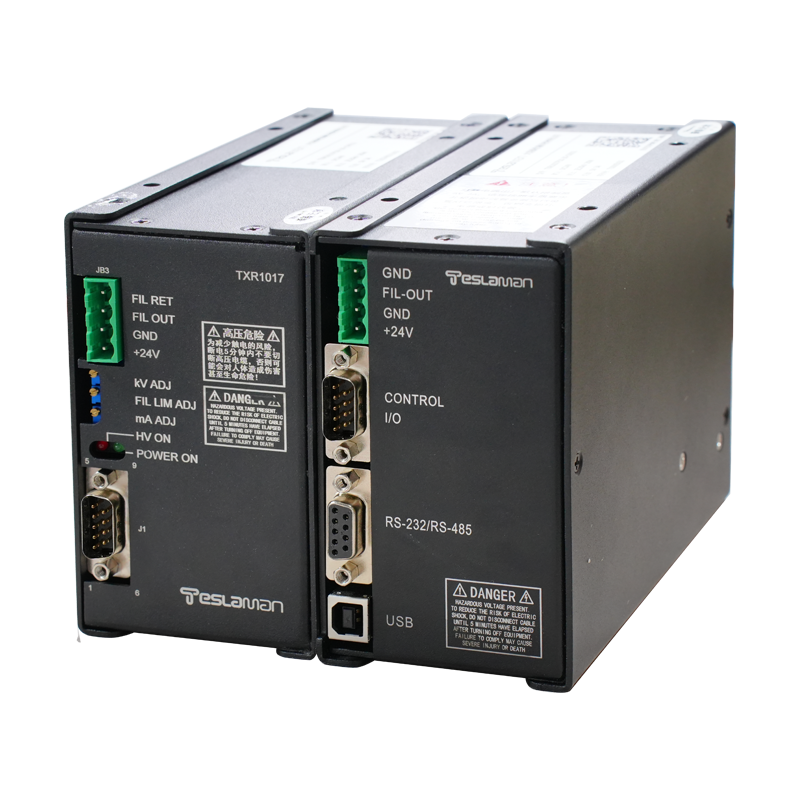
The high-voltage generation for the portable instruments uses the compact converter and the high-frequency technology, and the weight reduction is achieved through the efficient design and the material selection. The high-frequency transformer and the solid-state components reduce the size and the weight, and the thermal management is optimized. The compact design supports the portability.
The output voltage of 320kV provides the penetration capability for the inspection of the thick components, and the voltage stability affects the image quality. The control of the output is implemented for the consistent X-ray generation, and the exposure parameters are adjusted for the inspection conditions. The performance of the supply supports the inspection quality.
The field operation of the portable instruments requires the battery or the portable power supply, and the energy efficiency of the high-voltage supply affects the operating time. The efficient design reduces the power consumption, and the thermal management supports the continuous operation. The energy efficiency supports the field use.
The safety of the X-ray inspection requires the radiation protection and the safe operation, and the portable instruments include the interlocks and the shielding. The high-voltage supply is integrated with the safety functions for the controlled operation, and the operator protection is implemented. The safety design supports the field use.
The verification of the portable instrument includes the evaluation of the X-ray output and the image quality, and the results are compared with the specification. The inspection capability is tested with the reference specimens, and the reliability is confirmed. The verification supports the qualification of the instrument.
The portable X-ray inspection supports the maintenance and the quality assurance of the industrial infrastructure, and the reliable instruments enable the on-site testing. The lightweight high-voltage design contributes to the portability, and the technology advances the field inspection capability.
The advancement of the nondestructive testing demands the higher portability and the better image quality, and the instrument design follows the requirements of the field applications. The improved high-voltage technology and the digital imaging enhance the capability, and the cooperation with the inspection service providers drives the innovation.
Lightweight high voltage of the 320kV high-voltage supplies enables the portable industrial X-ray nondestructive testing, and the compact design, the careful performance control, and the verification deliver the required inspection capability. The continued development will support the advancement of the portable inspection technology.
The maintenance of the portable instrument includes the verification of the high-voltage output and the inspection of the tube condition, and the condition of the components affects the inspection quality. The battery and the cooling systems are serviced at the defined intervals, and the instrument is requalified after the maintenance. The maintenance program supports the field reliability.
The training of the operators covers the operation of the portable instrument and the radiation safety procedures, and the interpretation of the radiographic images is included in the training. The inspection procedures are followed for the consistent results, and the technical support provides the assistance. The training supports the effective field use.
The economic assessment of the portable inspection considers the inspection coverage, the field productivity, and the operating cost, and the portability reduces the logistics and the inspection time. The reliable inspection reduces the maintenance cost of the inspected components, and the investment is justified by the operational benefit. The assessment supports the equipment decisions.
The documentation of the portable instrument includes the operating instructions, the calibration records, and the maintenance history, and the documentation supports the traceability and the quality assurance. The reviews of the data support the improvement, and the documentation is maintained according to the quality system. The documentation supports the field operation.
The verification of the complete instrument includes the evaluation of the inspection quality and the reliability over the field conditions, and the consistency of the results is confirmed. The instrument is qualified for the field use, and the periodic checks confirm the continued performance. The verification supports the reliability of the inspection.
The collaboration between the equipment suppliers and the inspection service providers supports the optimization of the portable instruments, and the exchange of the experience contributes to the refinement of the design. The requirements of the field applications guide the development, and the instruments are adapted accordingly. The collaboration drives the advancement of the portable inspection technology.
The comparison of the portable and the stationary inspection systems provides the perspective on the advantages and the limitations, and the evaluation supports the selection for the specific applications. The requirements of the inspections determine the suitable system, and the economics are considered. The evaluation supports the informed decision-making.
The scaling of the field inspection services to the additional regions requires the deployment of the additional instruments, and the performance of the instruments is verified for the consistent operation. The data from the inspections is aggregated for the analysis, and the procedures are harmonized. The scaling supports the expansion of the inspection services.
The continuous improvement of the instrument is supported by the field data analysis and the design validation, and the improvements are implemented after the verification. The performance targets are reviewed periodically, and the documentation is updated. The continuous improvement maintains the capability of the inspection.
The reliability of the portable instrument in the field is supported by the robust design and the service program, and the field conditions are accounted for in the design verification. The battery and the high-voltage sections are monitored for the condition, and the service intervals are planned accordingly. The reliability management supports the dependable field operation.