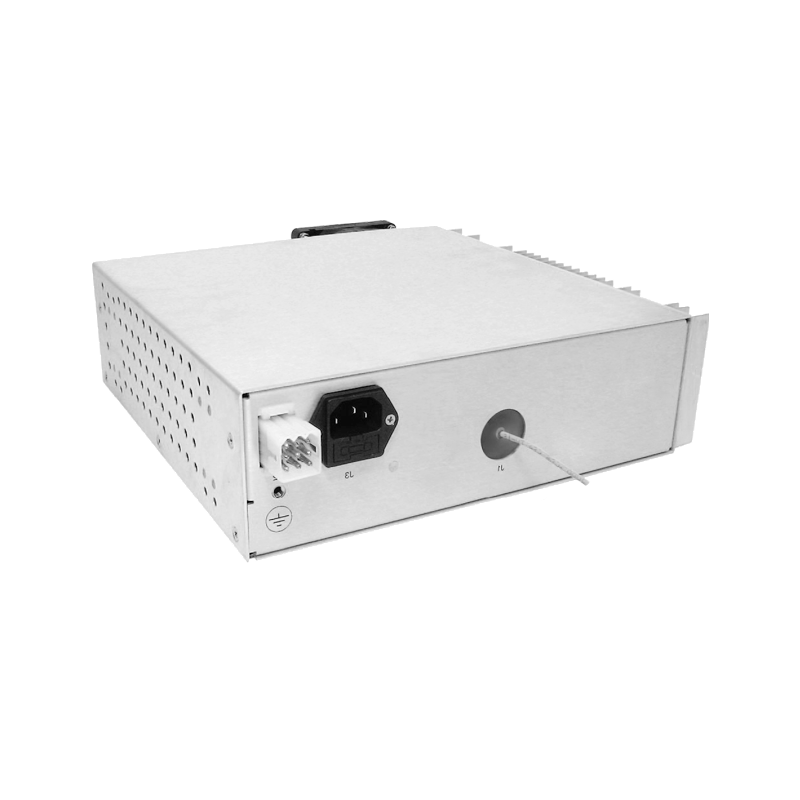
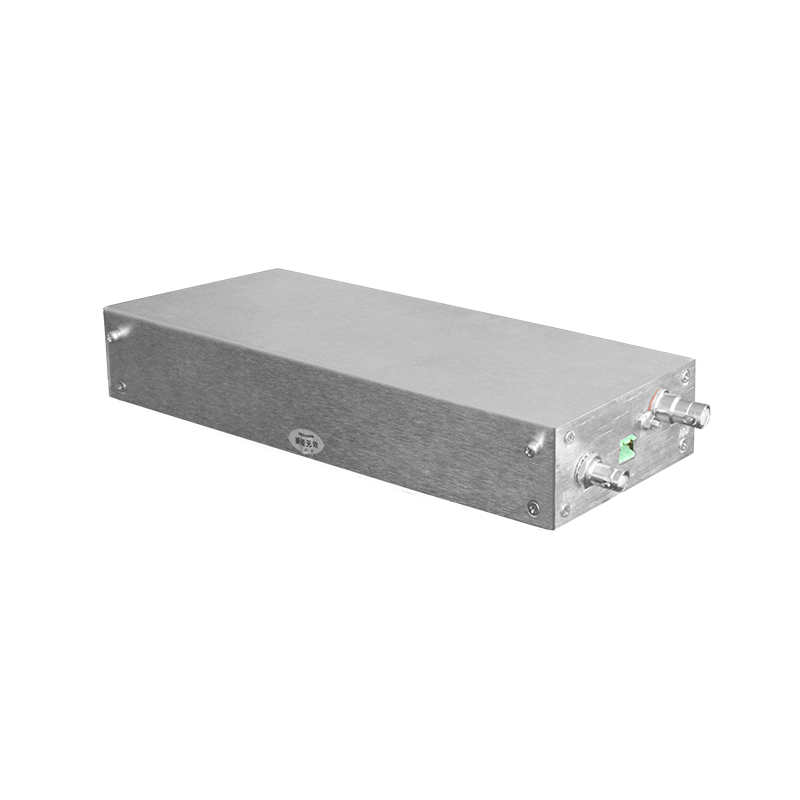
Exploration of Domestic Application of Power Supplies in Wafer Cleaning Systems
The localization of high-voltage power systems for wafer cleaning equipment has evolved from straightforward component replacement to sophisticated system-level integration that addresses the specific pain points of domestic fabrication facilities, including supply-chain resilience, rapid field support, and total cost optimization while meeting the stringent electrical performance required for sub-5 nm cleaning processes. Early efforts concentrated on replicating imported megasonic generator topologies using domestically available wide-bandgap devices and high-purity magnetics, but the breakthrough came through redesign of the entire power delivery chain to exploit unique advantages of local manufacturing ecosystems.
Domestic silicon carbide modules rated for 1700 V blocking voltage with on-resistance below 50 mΩ enabled resonant inverters to operate at 250-350 kHz switching frequency while maintaining junction temperatures under 90 °C even during continuous 3 kW burst operation. This eliminated the complex multi-stage cooling systems required by imported silicon-based designs and allowed direct liquid immersion of the entire power stage using domestically formulated single-phase dielectric fluids that exhibit zero ozone depletion potential and superior long-term stability in aggressive chemical environments.
Transformer development leveraged local expertise in nanocrystalline soft magnetic alloys to produce cores with 60 % lower core loss than conventional ferrite at 900 kHz while achieving coupling coefficients above 0.998 through precision multilayer winding techniques developed originally for aerospace applications. The resulting output transformers deliver voltage gain stability better than 0.2 % across temperature and load variations without requiring active compensation loops that previously consumed additional control complexity.
Control architecture adopted fully domestic 55 nm mixed-signal processors incorporating hardened analog front-ends capable of resolving transducer current phase to within 0.1 electrical degrees. These devices implement digital phase-locked loops with adaptive bandwidth that automatically compensate for quartz rod length changes caused by chemical etching over thousands of hours of operation, maintaining greater than 97 % power transfer efficiency throughout the transducer lifecycle without manual retuning.
Safety and chemical resistance requirements drove adoption of glass-ceramic hybrid packaging for all high-voltage output modules. Domestic ceramic-metal brazing technology originally developed for satellite propulsion systems produces hermetic seals that withstand prolonged immersion in heated sulfuric-peroxide mixtures and ozone-saturated water without measurable leakage current increase after 5000-hour accelerated life testing.
Field serviceability received particular attention given the geographic distribution of domestic 300 mm lines. Power modules incorporate quick-release high-voltage connectors with integrated fiber-optic status feedback that allow complete generator swap in under fifteen minutes using only basic hand tools. Built-in automatic calibration routines execute upon insertion, mapping transducer impedance and storing compensation coefficients in less than thirty seconds, eliminating the extended requalification periods that previously impacted tool availability after imported module replacement.
Energy efficiency emerged as an unexpected localization advantage. Domestic designs incorporate synchronous rectification on both primary and secondary sides with gallium nitride low-side devices that achieve greater than 96 % end-to-end efficiency during megasonic bursts while dropping to sub-10 W quiescent draw between wafers through complete power stage shutdown enabled by ultrafast wake-up circuitry. This represents a measurable improvement over many imported units that maintain continuous bias on output multipliers.
Electrostatic charge control sections benefited from domestic ionizer electrode materials exhibiting 40 % higher secondary emission yield than imported alternatives, allowing equivalent neutralization performance at 20-25 % lower operating voltage and corresponding reductions in corona-induced particle generation.
Reliability demonstration programs subjected complete localized systems to marathon testing exceeding 20 000 operating hours in actual production tools running the most aggressive front-end-of-line cleaning sequences. Results showed zero catastrophic failures and parametric drift limited to 1.8 % in acoustic power delivery, surpassing the field performance of many established imported solutions while achieving 35-45 % reduction in acquisition cost and greater than 60 % reduction in mean time to repair through local spare parts availability.
Production implementation across multiple 28 nm and 14 nm facilities has validated recipe compatibility through identical command structure and response timing, enabling seamless integration with existing process control software while delivering measurable improvements in particle removal efficiency on challenging copper dual-damascene structures and cobalt contact cleaning applications.