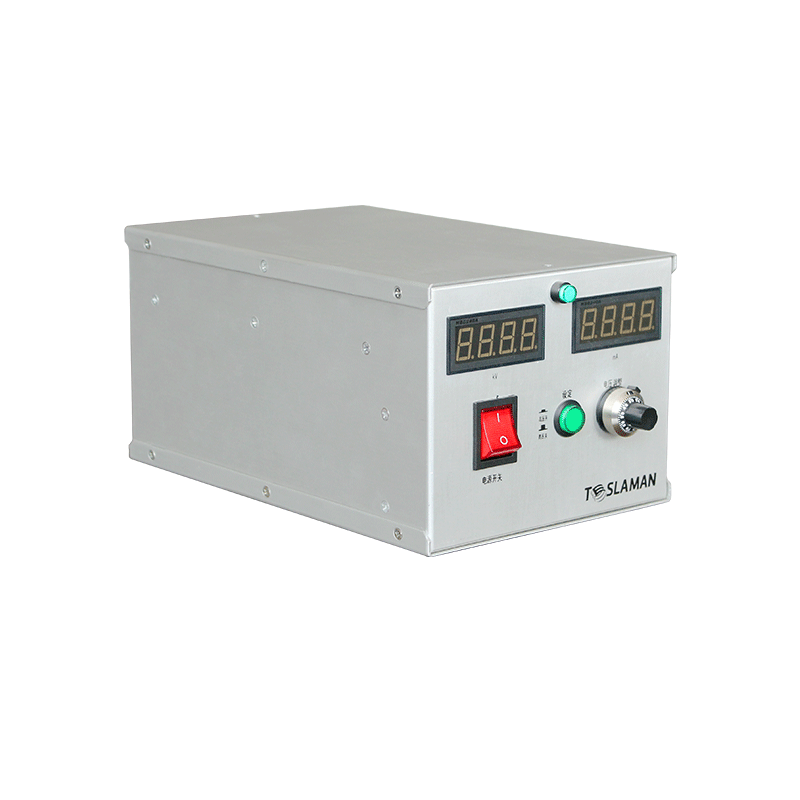
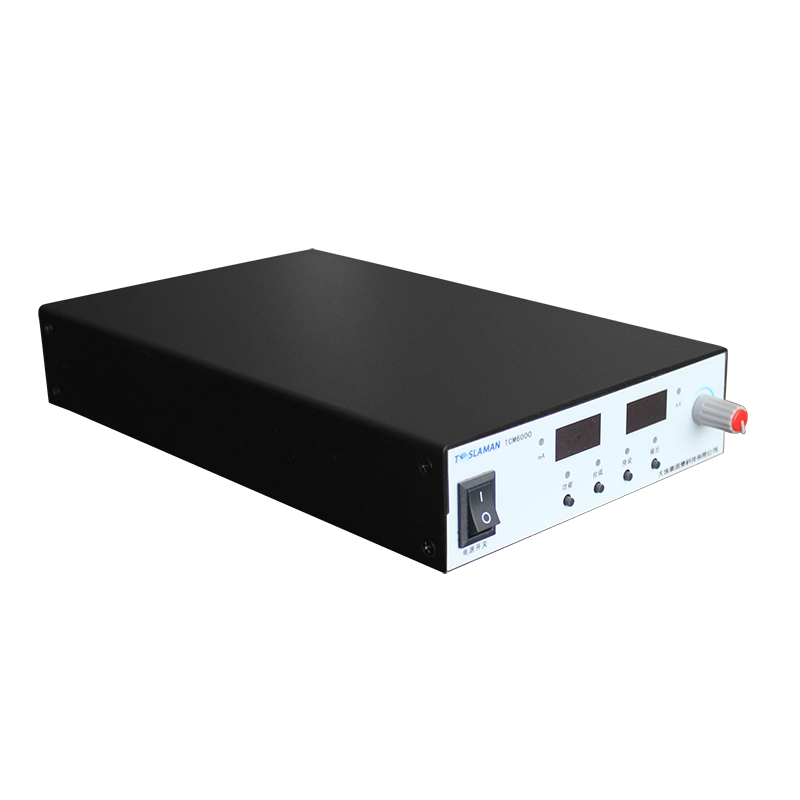
Plastic Fluorescence Sorting High-Voltage Ultraviolet Excitation Source
The recycling of post-consumer plastics relies heavily on automated sorting technologies to separate polymer types with high purity. Fluorescence-based sorting has emerged as a powerful method, particularly for distinguishing polymers like polyethylene terephthalate (PET) from polyvinyl chloride (PVC) or identifying specific additives. This technique involves illuminating plastic flakes with ultraviolet (UV) light, causing characteristic fluorescence emissions that are detected by sensitive spectrometers. The effectiveness of this method is fundamentally dependent on the UV excitation source, which often requires a high-voltage power supply to generate intense, stable UV pulses. This is not a simple lamp driver; it is a precision-engineered system designed to maximize sorting throughput, accuracy, and reliability in an industrial environment.
The core of the system is typically a pulsed gas-discharge lamp, such as a xenon flashlamp, chosen for its broad UV spectrum and high peak intensity. The electrical demands of driving such a lamp are specific and challenging. To initiate the gas discharge, a high-voltage trigger pulse in the range of 10-30 kV is required to ionize the gas within the lamp's envelope. This trigger must be very short (microsecond duration) and have a fast rise time to ensure reliable ignition with every pulse. Following ignition, the main power supply must deliver a high-current pulse through the now-conductive lamp to sustain a bright, consistent flash. This is usually achieved by discharging a capacitor bank through the lamp via a high-power switch, such as a silicon-controlled rectifier (SCR) or an insulated-gate bipolar transistor (IGBT). The high-voltage power supply's primary role is to recharge this capacitor bank rapidly and with high efficiency between flashes, which can occur at frequencies from tens to hundreds of Hertz.
The design of the high-voltage charging supply is critical for system performance. It must operate in a constant-current mode to safely and efficiently charge the storage capacitor from near-zero voltage to the desired setpoint, typically several hundred volts to over a kilovolt. A resonant charging topology, such as a flyback or LLC converter, is commonly employed. This topology minimizes switching losses and electromagnetic interference, which is crucial in a system containing sensitive optical detectors. The charging current must be precisely controlled. If too high, it stresses the capacitors and the lamp electrodes, shortening their lifespan. If too low, it limits the maximum flash repetition rate, capping sorting throughput. The supply therefore incorporates a fast, closed-loop current control that is synchronized to the flash trigger command.
Stability and repeatability of the flash are paramount for accurate sorting. Any variation in the lamp's optical output—its intensity or spectral distribution—directly translates into variation in the fluorescence signal, leading to mis-sorts. The power supply ensures this stability in several ways. First, the capacitor charging voltage is regulated with high precision, typically better than 0.1%, as the flash energy is proportional to the square of the voltage. Second, the timing of the flash relative to the optical detection system must be jitter-free. The entire sequence—capacitor charging completion, trigger pulse generation, and activation of the spectrometer's detection gate—is controlled by a digital timing controller with nanosecond precision, often directly embedded within the power supply's control circuitry. This ensures the detector is sampling the fluorescence signal at the exact peak of every flash.
The system must also be robust. Industrial recycling plants are electrically noisy environments with fluctuating mains voltages. The power supply must have excellent line and load regulation and be heavily filtered against incoming transients. Furthermore, the lamp's impedance changes over its lifetime and can vary slightly from flash to flash. The supply and its trigger circuit must be tolerant of these variations, ensuring consistent ignition. Advanced systems include diagnostic feedback, such as monitoring the lamp current pulse shape. Deviations from the norm can indicate lamp aging or failure, allowing for predictive maintenance. By providing the precisely controlled high-voltage pulses that drive the UV excitation, this specialized power supply enables the high-speed, non-contact identification of plastics, forming the technological backbone of modern, efficient material recovery facilities.