Interlayer Remelting High-Voltage Strategy for Electron Beam Additive Manufacturing
Electron Beam Additive Manufacturing (EBAM), particularly for high-value metallic components in aerospace and medical industries, involves the layer-by-layer fusion of metal powder using a high-energy electron beam. A critical challenge in this process is the management of residual stress, microstructural homogeneity, and surface roughness between layers. Interlayer remelting, a technique where a deposited layer is partially or fully re-scanned with a defocused or modulated beam before the next powder layer is applied, has emerged as a powerful strategy for quality enhancement. The execution of this strategy is fundamentally governed by the dynamic control capabilities of the high-voltage power supply and beam deflection system.
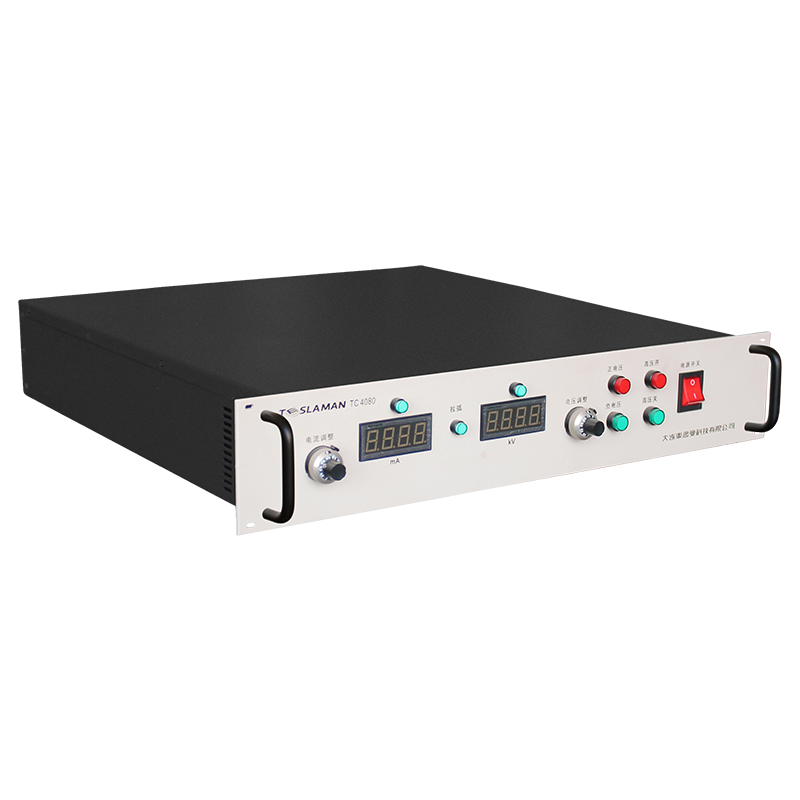
The primary role of the high-voltage supply, providing the accelerating potential for the electron beam, is to control the beam's power density and penetration depth. During the initial melting of a new powder layer, a high accelerating voltage, typically between 30 and 60 kV, is used to achieve deep penetration and strong interlayer bonding. For the subsequent interlayer remelting pass, the objectives shift towards stress relief, grain refinement, and surface smoothing. This often requires a different energy input profile. One approach is to reduce the accelerating voltage significantly, lowering the beam's kinetic energy and increasing its interaction cross-section, resulting in a wider, shallower melt pool ideal for smoothing the previous layer's surface. The ability of the high-voltage supply to switch between these discrete voltage levels rapidly and stably is crucial. Any overshoot or instability during the transition can create localized keyhole instabilities or voids.
A more sophisticated strategy involves dynamic voltage modulation during the remelting scan itself. Instead of a constant voltage, the supply can be programmed to output a waveform that periodically varies the beam energy. For example, a sinusoidal modulation of several kilovolts at a frequency of tens to hundreds of hertz can create a oscillatory thermal front in the melt pool. This promotes Marangoni convection, helping to homogenize the alloy composition and break up columnar grain growth, leading to a more equiaxed microstructure. The power supply must have both the bandwidth to produce these modulation frequencies without distortion and the control fidelity to ensure the modulation depth is exact, as over-modulation can cause spatter or under-modulation may be ineffective.
Synchronization with beam deflection and focus is paramount. The interlayer remelting pattern may differ from the primary melting pattern; it might be a simple raster offset, a series of parallel lines at a different angle, or a specific contour following the part's geometry. The beam's focal point (spot size) is also often changed for remelting, requiring coordinated adjustment of the focus coil current. The high-voltage supply for beam acceleration, the digital scan generators for deflection, and the focus supply must all operate on a tightly synchronized digital clock. The system controller calls up a pre-defined process recipe where voltage, beam current, scan speed, spot size, and path are all parameterized and executed in a coordinated sequence for each layer and its subsequent remelt cycle.
Thermal management through the high-voltage strategy is also vital. The remelting pass adds additional energy input. To prevent excessive heat buildup in the part, which can lead to distortion or unwanted phase transformations, the overall energy input must be balanced. This can involve not only reducing voltage but also employing a pulsed beam during remelting. The beam blanking system, controlled by a separate high-voltage amplifier, gates the beam on and off at high frequency during the remelt scan. The duty cycle of this pulsing controls the average power. The blanking amplifier must have minimal rise/fall time to create sharp, clean beam on/off transitions, preventing unintended partial exposure that could degrade the surface finish the remelting aims to improve.
Implementing this strategy requires a holistic view of the high-voltage ecosystem within the EBAM system. It demands power supplies with fast, programmable outputs, low-noise characteristics to prevent beam wander during sensitive low-voltage remelting, and robust communication interfaces for seamless recipe integration. The outcome is a significant enhancement in part quality: reduced need for post-process machining due to smoother surfaces, improved fatigue life from refined microstructures, and lower residual stress enabling the fabrication of larger, more complex components without distortion. The high-voltage system thus evolves from a simple beam power source into an essential tool for in-situ process metallurgy.