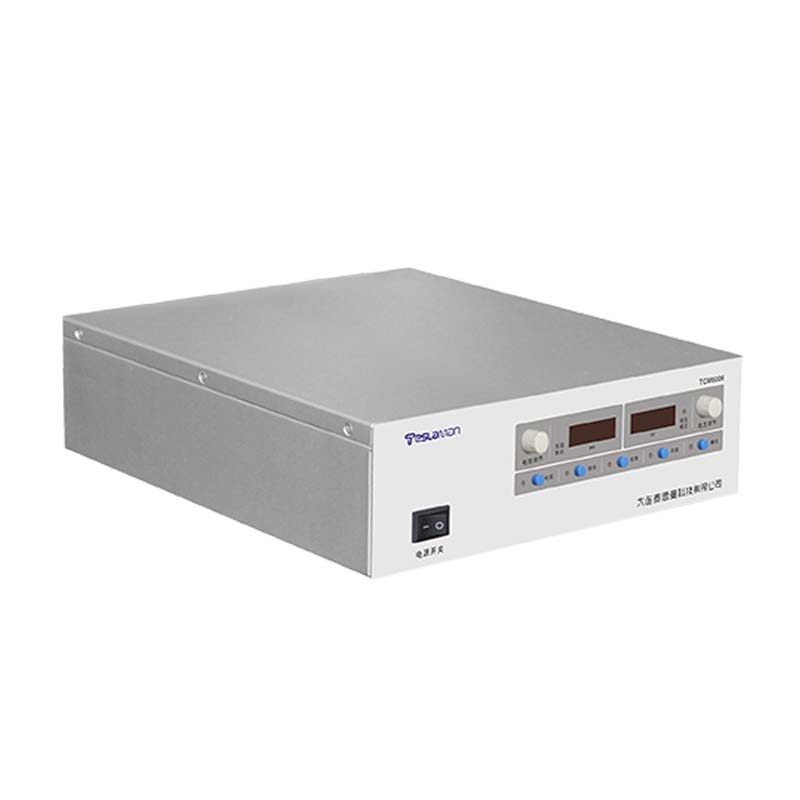
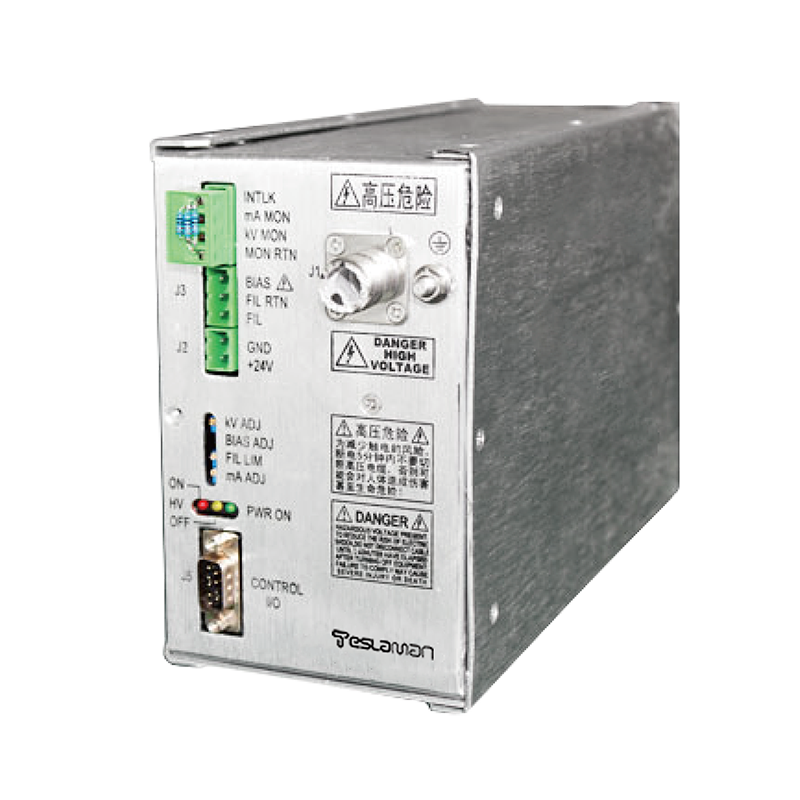
High-Voltage Light Source for Multi-Band Spectral Sorting of Plastics
The accurate sorting of post-consumer plastic waste, particularly black and dark-colored polymers which are opaque to traditional near-infrared (NIR) sensors, requires more sophisticated optical techniques. Multi-band spectral sorting, utilizing specific excitation wavelengths across the ultraviolet, visible, and short-wave infrared spectrum to induce characteristic fluorescence or reflectance signatures, has emerged as a viable solution. The efficacy of this method is fundamentally dependent on the performance and stability of the high-voltage driven light sources that generate these precise excitation bands.
Unlike broad-spectrum illumination, multi-band sorting employs discrete, narrow-band light sources such as pulsed xenon flash lamps, light-emitting diodes (LEDs), or specifically filtered lasers to probe the material. Many of these sources, particularly high-intensity pulsed lamps and certain laser diodes, require high-voltage power supplies for their operation. A pulsed xenon lamp, for instance, needs a trigger pulse of several kilovolts to ionize the gas, followed by a sustained discharge from a capacitor bank charged to hundreds of volts. The spectral output, pulse energy, and temporal profile of this flash are directly controlled by the parameters of these high-voltage circuits. For LED arrays designed for deep ultraviolet excitation, the forward voltage may be modest, but achieving the necessary high current pulses for sufficient photon flux often involves switch-mode drivers with high-voltage rails and fast-switching transistors to manage the inductive kickback.
The core challenge lies in generating stable, repeatable optical pulses across multiple wavelength channels. Each channel's high-voltage driver must exhibit minimal pulse-to-pulse jitter and energy variation, as the detected fluorescent or reflected signal from the fast-moving plastic flake is compared against a calibrated library. Any drift in the excitation source intensity corrupts this comparison, leading to mis-sorting. This necessitates high-voltage supplies with exceptional regulation and low noise. For pulsed systems, the charging voltage of the storage capacitor must be held constant within a fraction of a percent. Furthermore, the trigger generator for a flash lamp must provide a consistent high-voltage pulse with a fast rise time to ensure uniform gas breakdown every time, as inconsistent ignition alters the plasma dynamics and the subsequent spectral emission.
Synchronization is another critical dimension. In a typical system, a plastic item is conveyed at high speed under a sensing head. As it passes, a sequence of different wavelength pulses is fired in rapid succession, and detectors capture the material's response to each. The timing between these pulses, and between the pulses and the detector gating, must be exquisitely controlled, often with microsecond precision. This places demands on the high-voltage pulse generators or modulators to accept precise external triggers and respond with deterministic, low-jitter delays. The control system must orchestrate an entire sequence: triggering a UV pulse, gating the corresponding UV-sensitive photomultiplier tube (itself biased at a kilovolt), then milliseconds later triggering a visible pulse, and so on. Crosstalk or timing errors between these high-voltage channels can lead to spectral contamination of the detected signals.
Environmental robustness is non-negotiable in an industrial sorting plant. The high-voltage modules powering the light sources must operate reliably in environments with significant vibration, particulate matter, and wide temperature fluctuations. This demands conformal coating of circuit boards, hermetic sealing of sensitive components, and the use of connectors rated for high vibration. Thermal management of the high-voltage drivers is crucial, as temperature changes can affect the output characteristics of semiconductor switches and the value of timing components, indirectly altering the light pulse properties. Active cooling with careful attention to condensation prevention is often required.
The integration of these light sources with the high-speed classification algorithm completes the loop. The signal-to-noise ratio of the detected optical response determines sorting accuracy. Therefore, the high-voltage parameters for each light source are not static but are optimized as part of the overall system calibration. This might involve tuning the pulse width or energy of a specific wavelength channel to maximize the contrast between, for example, acrylonitrile butadiene styrene (ABS) and polystyrene (PS). The power supplies, therefore, need to be programmable, allowing parameters to be stored and recalled for different waste stream recipes. This level of integration transforms the high-voltage light source from a mere illuminator into a programmable spectroscopic probe, enabling the accurate separation of complex plastic mixtures that were previously considered non-recyclable.