Multi-Axis High-Voltage Path Planning for Electrospinning
Electrospinning is a versatile fiber production method that utilizes a high-voltage electric field to draw charged jets of polymer solution or melt into ultra-fine fibers, creating non-woven mats with high surface area and porosity. Traditional electrospinning uses a single static nozzle and a flat collector, producing randomly oriented fiber mats. However, the technique has evolved into a deterministic additive manufacturing process for the direct writing of ordered micro and nanofiber architectures. This evolution relies heavily on the integration of multi-axis motion control with dynamic high-voltage field management, a discipline we term high-voltage path planning.
In direct-write electrospinning, often called melt electrowriting or near-field electrospinning, the nozzle-to-collector distance is dramatically reduced to sub-centimeter range, minimizing jet whipping instability. The collector is mounted on a precision XY stage or the nozzle on a robotic arm. As the collector moves, the fiber is deposited in a programmed pattern. However, the fiber deposition point is not directly beneath the nozzle. The charged jet is influenced by both the potential on the nozzle and the accumulated charge on the previously deposited fibers. This electrostatic force pulls the landing fiber toward existing features, a phenomenon known as charge-induced repulsion or attraction. To achieve accurate placement, the high-voltage parameters must be dynamically adjusted in coordination with the path.
This path planning problem involves multiple axes: the X and Y motion of the stage, the Z-axis position of the nozzle (which controls the electric field strength), and critically, the applied high voltage. The voltage is not a constant set during the print; it is a time-varying trajectory variable. For example, when initiating a new fiber line, a higher voltage may be required to overcome the surface tension of the polymer and initiate a stable jet. Once the jet is established and the fiber is being laid down, the voltage may be reduced to a lower sustaining level.
As the stage approaches a turn or a sharp corner in the pattern, the dynamics change. The stage velocity must decrease to accurately track the path. If the voltage remains constant, the reduced linear speed means that more charge is deposited per unit length of fiber. This can cause excessive electrostatic repulsion between adjacent loops of the fiber, leading to buckling, fiber broadening, or even arcing. Therefore, the path planning algorithm must modulate the voltage in real-time, proportionally reducing it as stage speed decreases to maintain a constant charge per unit length.
Furthermore, for complex three-dimensional structures, multiple layers are printed. As the insulating fiber mat builds up, the effective distance between the nozzle and the conductive collector increases. This reduces the electric field strength for a given voltage. An advanced system uses a layer-counting algorithm or even real-time capacitance sensing to estimate this height. The high-voltage setpoint is then incremented for each subsequent layer to maintain a constant electric field and consistent fiber diameter.
Some systems employ a dual-electrode configuration: a primary high voltage on the nozzle and a secondary, independently controlled voltage on a ring electrode or a guide plate positioned near the nozzle. This second high-voltage channel shapes the electric field lines, allowing for active steering of the jet. The path planning software computes the desired fiber landing vector and commands the necessary differential voltage between the nozzle and the guide electrode to steer the jet towards the target location. This effectively adds two more high-voltage control axes to the system.
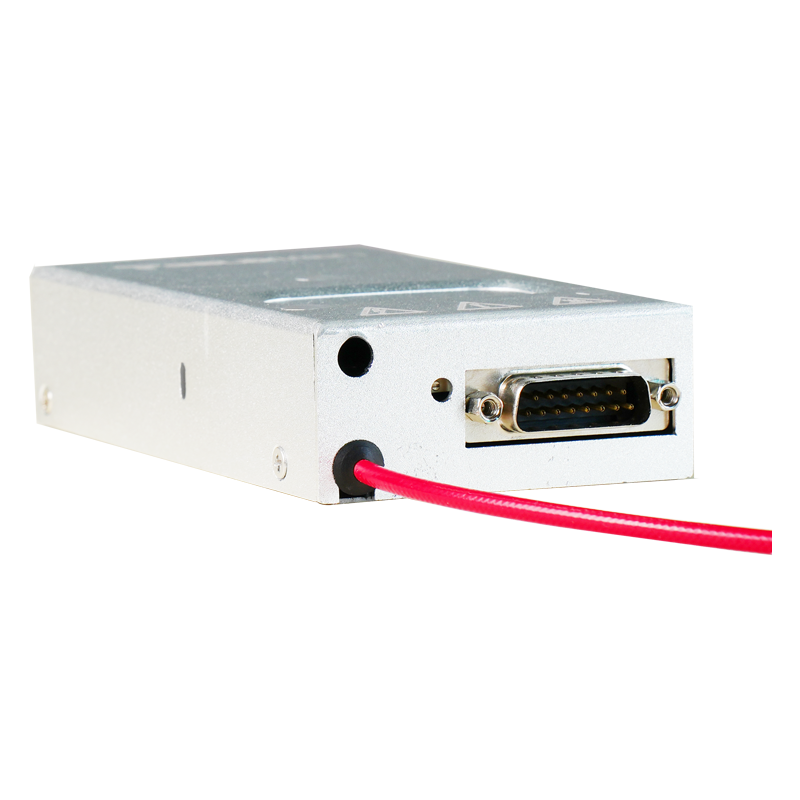
Implementing this requires a high-voltage power supply with multiple independent, fast-slewing outputs under digital control. The motion controller and the high-voltage controller must be tightly integrated, sharing a common real-time clock and communicating with deterministic latency. The path planning software, originally designed only for positioning, now incorporates a model of the electrohydrodynamic process, generating synchronized command streams for both the stage motors and the high-voltage amplifiers.
This convergence of motion control and high-voltage engineering transforms electrospinning into a true additive manufacturing technology. It enables the fabrication of precisely ordered scaffolds for tissue engineering, micro-patterned filters, and flexible electronic components with fibrous architectures. The high-voltage supply is no longer a standalone accessory but an integral axis of the machine, its output programmed as carefully as the motion of the stage itself. This synthesis of disciplines is what allows us to write with electricity, building structures one charged droplet or fiber at a time.