Integrated High-Voltage Microfluidics for Capillary Electrophoresis Chips
Capillary electrophoresis has long been a workhorse technique for the separation of biomolecules, such as DNA fragments and proteins, based on their size and charge. The miniaturization of this technique onto a microfluidic chip, often referred to as lab-on-a-chip, has revolutionized the field, offering faster separations, lower sample consumption, and the potential for high-throughput, portable analysis. At the heart of every capillary electrophoresis chip lies a network of microchannels filled with a conductive buffer. The separation is driven by the application of a high voltage, typically in the range of several hundred to a few thousand volts, across the length of the separation channel. This voltage generates an electric field that causes the charged analytes to migrate towards the detector. The integration of this high-voltage capability into a microfluidic chip is a fascinating and demanding engineering challenge, one that I have watched evolve from a laboratory curiosity into a mature technology. It is no longer sufficient to simply connect a benchtop high-voltage power supply to a chip via wires; the goal is to integrate the high-voltage generation, control, and switching directly onto the chip or into its immediate package, creating a truly portable and self-contained analytical system.
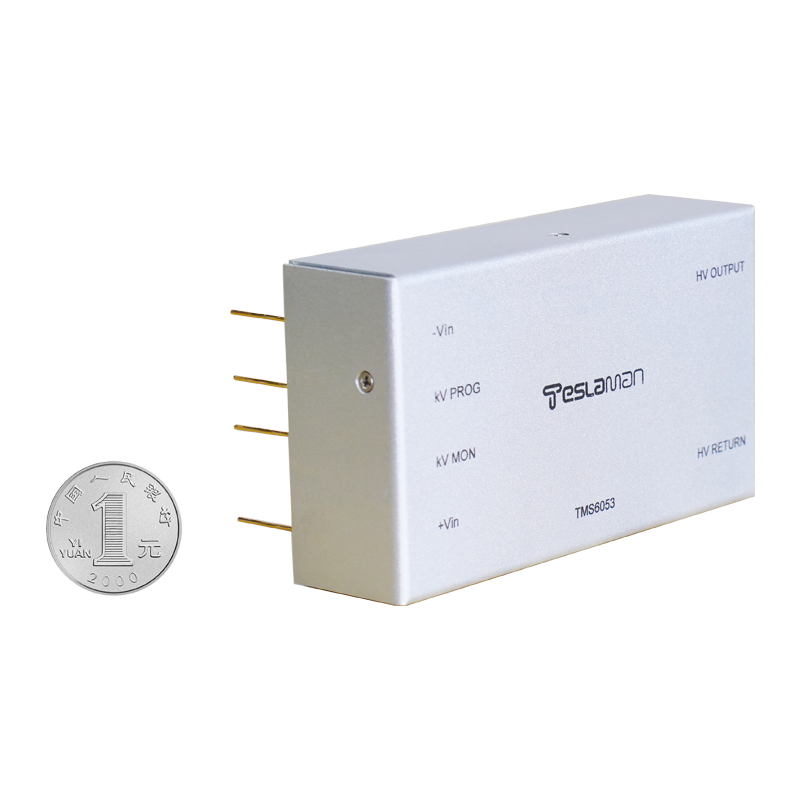
The fundamental requirement for chip-based capillary electrophoresis is the ability to apply precise, stable, and programmable high voltages to multiple points on the chip. A typical chip has several reservoirs for sample, buffer, and waste, and the separation is controlled by a sequence of voltage applications. First, a voltage is applied across the sample and waste reservoirs to electrokinetically inject a small plug of sample into the separation channel. Then, the voltage is switched to the buffer and waste reservoirs to drive the separation. This switching must be fast and reproducible, and it must be free of high-voltage transients that could damage the chip or disturb the sample plug. The voltages must be stable to within a few volts to ensure consistent migration times, and the current must be monitored to detect the passage of the analyte bands, which can cause a tiny change in conductivity. Integrating all of this functionality into a chip-scale system requires a departure from traditional benchtop power supplies. The high voltage must be generated on or near the chip, often using miniature DC-DC converters or even charge pumps that can be fabricated directly on the chip substrate using microelectronics techniques. These on-chip high-voltage generators must be efficient, as the power budget for a portable device is limited, and they must be capable of delivering the small currents, typically microamps, required for electrophoresis.
The control of these high voltages is another critical aspect. The chip may require four or more independent high-voltage outputs, each of which must be switched on and off with precise timing. This is typically accomplished using high-voltage switching transistors, which can also be integrated onto the chip or into the chip's package. These switches must be able to handle the full separation voltage without breakdown and must have very low leakage currents when off. The control logic for these switches, which is typically low-voltage CMOS, must be carefully isolated from the high-voltage domain to prevent damage. This isolation can be achieved through optical coupling, magnetic coupling, or by using specialized level-shifting circuits. The entire high-voltage system on the chip must also be designed with safety in mind. The voltages are high enough to be hazardous, so the chip and its packaging must include features to prevent accidental contact and to safely discharge any stored energy when the device is powered down.
Beyond the generation and switching, the integration of the high-voltage system with the detection system is crucial. The most common detection method in capillary electrophoresis chips is laser-induced fluorescence, where a laser beam is focused on the separation channel and the emitted light is collected by a photodetector. The high-voltage fields can generate electromagnetic interference that couples into the sensitive photodetector electronics, adding noise to the signal. Careful shielding and grounding of the chip and its associated electronics are essential. In some advanced designs, the separation channel itself is used as a waveguide for the excitation light, further integrating the optical and electrical functions. In my long career, I have seen the trajectory of analytical instrumentation consistently move towards miniaturization and integration. The capillary electrophoresis chip is a perfect example of this trend. By integrating the high-voltage power supply, the control electronics, the microfluidics, and the detector into a single, compact package, we are putting the power of a full-scale analytical laboratory into the palm of a hand. This enables point-of-care medical diagnostics, on-site environmental monitoring, and rapid forensic analysis, all powered by the precise and controlled application of high voltage at the microscale.