Multi Stage Voltage Control and Fiber Orientation Accuracy of Electrostatic Flocking High Voltage Power Supply
Electrostatic flocking applies short fibers to an adhesive coated substrate in an electric field, creating a velvet like surface with fibers standing perpendicular to the substrate. The fiber orientation accuracy determines the appearance, texture, and functional properties of the flocked surface. Multi stage voltage control applies different voltages at different stages of the flocking process, optimizing the fiber alignment and the adhesion. The high voltage power supply must provide the programmable, multi output capability for this sophisticated process control.
The electrostatic flocking process begins with applying adhesive to the substrate surface. Flock fibers, typically nylon or other synthetic materials cut to lengths of 0.5 to 5 millimeters, are introduced into an electric field between the substrate and a counter electrode. The electric field charges the fibers and drives them toward the adhesive coated substrate. The fibers penetrate the adhesive and become anchored, with their orientation determined by the electric field direction at the moment of contact.
Fiber orientation accuracy refers to how closely the fibers align perpendicular to the substrate surface. Ideally, all fibers stand straight up, creating a uniform velvet appearance. In practice, fibers may be tilted, clustered, or lying flat, degrading the appearance and texture. The orientation depends on the electric field strength and direction, the fiber charge, the fiber mechanical properties, and the adhesive properties. Stronger electric fields produce better alignment by overcoming the mechanical forces that cause tilting.
Multi stage voltage control recognizes that different phases of the flocking process benefit from different electric field conditions. The initial fiber charging stage requires sufficient field to charge the fibers effectively. The flight stage requires field strength that drives the fibers toward the substrate with appropriate velocity. The embedding stage requires field strength that maintains fiber alignment as the fibers penetrate the adhesive. The field strength may be varied between these stages to optimize each phase.
The charging stage applies voltage to the electrode system to create the field that charges the fibers. The charging efficiency depends on the field strength and the residence time of fibers in the charging region. Higher voltages produce stronger fields and more effective charging. However, excessive voltage can cause electrical discharge or excessive charge that causes fiber repulsion and clustering. The optimal charging voltage depends on the fiber material and the charging mechanism.
The flight stage drives the charged fibers toward the substrate. The flight velocity depends on the field strength and the fiber charge. Faster flight reduces the process time but may cause fiber bounce on the adhesive surface. Slower flight allows more time for fiber alignment but increases the process duration. The flight voltage controls the field strength during this stage.
The embedding stage maintains the electric field as the fibers penetrate the adhesive. The adhesive viscosity resists fiber penetration and can cause the fibers to tilt. The electric field provides an aligning force that keeps the fibers vertical during embedding. The embedding voltage may be different from the flight voltage, optimized for the alignment rather than the flight speed. The embedding time depends on the adhesive properties and the fiber length.
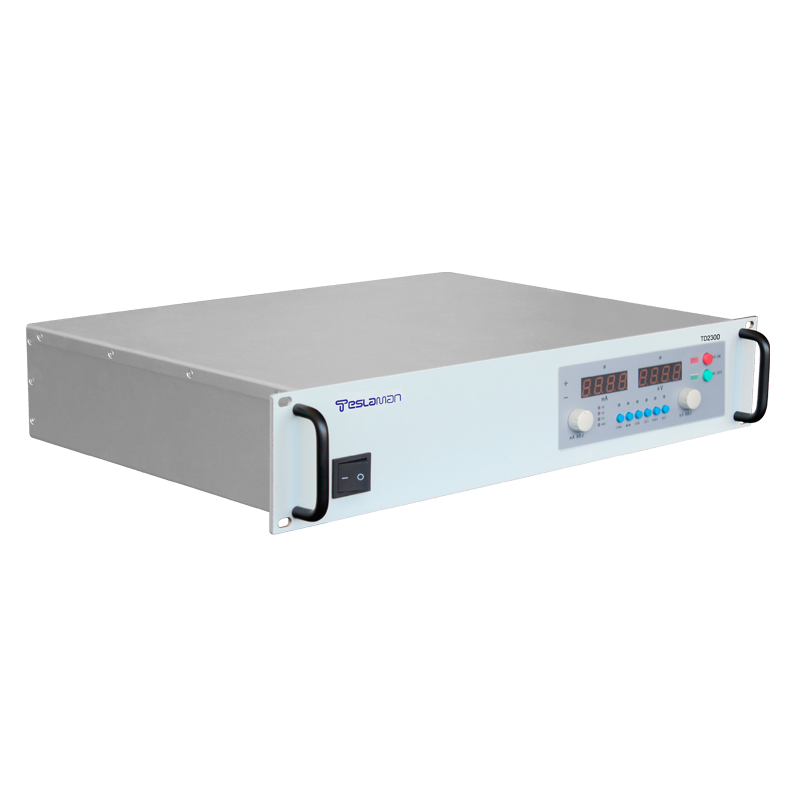
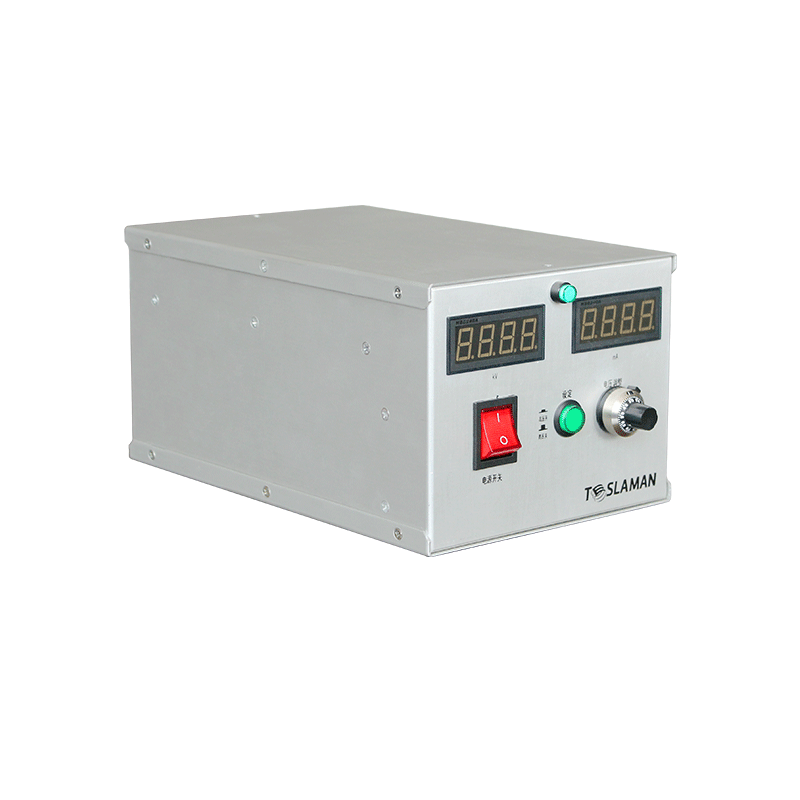
Multi output power supplies provide independent voltage control for multiple electrodes in the flocking system. The system may have separate electrodes for fiber charging and for the substrate field. Multiple zones across a wide substrate may have independent electrodes to control the field uniformity. The power supply must provide multiple independently controlled outputs with appropriate voltage and current ratings for each electrode.
Voltage programming enables automated execution of the multi stage flocking process. The process recipe specifies the voltage for each stage and the timing of the transitions between stages. The power supply controller executes the recipe, transitioning the voltages at the specified times. The programming capability enables optimization of the process for different fiber types, adhesives, and substrate configurations.
Field uniformity across the substrate surface affects the uniformity of the fiber orientation. Nonuniform fields cause variations in the fiber alignment across the substrate. The electrode design and the voltage distribution determine the field uniformity. Multi zone electrode systems with individually controlled voltages can compensate for geometric effects that cause field nonuniformity. The power supply provides the independent control needed for this compensation.
Quality assessment of the flocked surface measures the fiber orientation and density. Microscopic inspection reveals the fiber alignment and identifies tilted or clustered fibers. Optical measurements of the surface reflectance indicate the uniformity of the fiber orientation. Physical testing of the abrasion resistance and other functional properties assesses the performance of the flocked surface. These measurements guide the optimization of the multi stage voltage program.