Crystal Control and Quality Preservation of High Voltage Electrostatic Assisted Food Freezing
Food freezing preserves food quality by reducing temperature to inhibit microbial growth and enzymatic activity. The freezing process affects food quality through ice crystal formation, which can damage cellular structures and cause texture degradation upon thawing. High voltage electrostatic field application during freezing can influence ice crystal formation, potentially improving the crystal size and distribution to preserve food quality better than conventional freezing.
Ice crystal formation during freezing begins when the temperature drops below the freezing point and water molecules organize into crystalline structures. The nucleation of ice crystals occurs when sufficient water molecules cluster to form a stable crystal nucleus. The nucleation can be homogeneous, occurring spontaneously in pure water, or heterogeneous, occurring on surfaces or impurities that provide nucleation sites. Once nucleated, crystals grow by addition of water molecules to the crystal surface.
The freezing rate affects the ice crystal characteristics. Rapid freezing produces many small crystals as nucleation occurs at many sites before growth can proceed significantly. Slow freezing produces fewer larger crystals as nucleation is limited and growth proceeds for longer time before additional nucleation occurs. Small crystals cause less damage to cellular structures than large crystals, preserving texture better upon thawing.
Electrostatic field effects on freezing relate to the influence of electric fields on water molecule organization and ice nucleation. Electric fields can orient water molecules through their dipole moment, potentially affecting the nucleation process. The field may promote nucleation by aligning molecules in configurations favorable for crystal formation, or may inhibit nucleation by stabilizing configurations unfavorable for crystal formation. The effects depend on the field strength, the field orientation, and the freezing conditions.
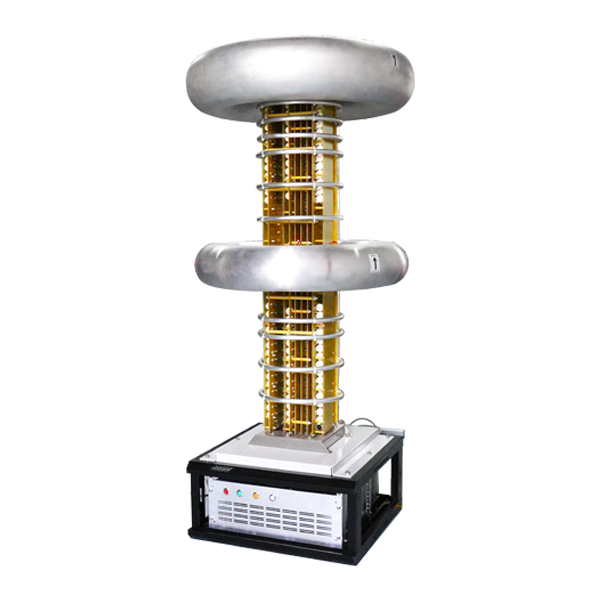
High voltage application during freezing creates an electrostatic field in the food material. The field strength depends on the applied voltage and the electrode geometry. Typical field strengths range from tens to hundreds of kilovolts per meter. The field may be applied continuously throughout the freezing process, or may be applied during specific phases such as the nucleation phase or the growth phase. The application timing affects the influence on crystal formation.
Nucleation enhancement through electrostatic field application can increase the number of ice crystals formed, producing smaller average crystal size. The field may lower the nucleation barrier, enabling nucleation at higher temperature or with fewer molecules. More nucleation sites produce more crystals that compete for available water, limiting the growth of each crystal. The result is a finer crystal structure with less damage to cellular structures.
Crystal growth modification through electrostatic field application can affect the crystal shape and orientation. The field may influence the growth rate at different crystal faces, modifying the crystal morphology. The field may orient the crystals relative to the field direction, producing aligned crystal structures. The growth modification can produce crystal characteristics that minimize damage to cellular structures.
Food type affects the electrostatic freezing effectiveness. Different foods have different water contents, different cellular structures, and different compositions that affect the freezing behavior and the electrostatic response. Foods with high water content and delicate cellular structures benefit most from improved crystal control. Foods with complex compositions may have different responses to electrostatic fields.
Electrode configuration for electrostatic freezing places electrodes in contact with or near the food material. Plate electrodes provide uniform field distribution for flat food items. Point electrodes can create localized high field regions for targeted treatment. The electrode design must ensure adequate field penetration into the food while maintaining electrical safety and avoiding contamination.
Temperature control during electrostatic freezing coordinates the field application with the cooling process. The field may be applied at specific temperatures during the freezing progression. The timing of field application relative to the nucleation and growth phases affects the outcome. The temperature profile must be controlled precisely to enable effective field application at the appropriate times.
Quality assessment of electrostatic frozen foods measures the crystal characteristics and the food quality after thawing. Microscopic examination reveals the ice crystal size and distribution. Texture measurement quantifies the mechanical properties after thawing. Sensory evaluation assesses the eating quality. Comparison with conventionally frozen foods demonstrates the quality improvement from electrostatic freezing.
Process optimization determines the field parameters that achieve the best quality improvement for specific foods. The optimization varies the field strength, application timing, electrode configuration, and freezing conditions to identify the optimal combination. Experimental studies characterize the effects of different parameters, building understanding that guides optimization. The optimized process provides the maximum quality benefit from electrostatic freezing.
Energy consumption of electrostatic freezing includes the energy for the electrostatic field generation and the energy for the conventional cooling. The electrostatic energy is typically small compared to the cooling energy, as the field generation requires voltage but minimal current. The energy consumption should not significantly increase the freezing cost, maintaining the economic viability of the process.