Independent Ion Energy Control Technology of Dual Frequency High Voltage Bias Power Supply for Atomic Layer Etching Equipment
Atomic layer etching removes material layer by layer with atomic scale precision, enabling precise patterning for advanced semiconductor devices. The etching process uses plasma generated by RF power, with ions accelerated toward the substrate by bias voltage. Dual frequency bias power supplies use two different frequencies to independently control ion energy and ion flux, enabling optimized etching with precise energy control while maintaining adequate etching rate.
Atomic layer etching cycles through sequential steps of surface modification and removal. The modification step creates a reactive layer on the surface, typically through adsorption of reactive species or through plasma activation. The removal step removes the modified layer, typically through ion bombardment that etches the modified material. The cycling enables precise etching depth control by controlling the number of cycles.
Ion bombardment during the removal step requires ions with controlled energy. The ion energy determines the etching characteristics, including the etching yield, the selectivity, and the damage to underlying material. Lower ion energies provide gentler etching with less damage but may have lower etching yield. Higher ion energies provide faster etching but may cause more damage. The ion energy must be optimized for the specific etching application.
Ion flux, the number of ions arriving at the substrate per unit time, determines the etching rate. Higher flux provides faster etching, completing each cycle more quickly. Lower flux provides slower etching but may enable more precise control. The flux must be adequate to achieve the required etching rate while the energy is controlled for etching quality.
Plasma bias applies voltage to the substrate relative to the plasma, accelerating ions toward the substrate. The bias voltage determines the ion energy, with higher voltages producing higher ion energies. The bias power determines the ion flux, with higher power producing higher plasma density and higher ion flux. In conventional single frequency bias, the voltage and power are coupled, making independent control of energy and flux difficult.
Dual frequency bias uses two RF frequencies applied simultaneously to the substrate. The frequencies are chosen to have different plasma coupling characteristics. The lower frequency couples more strongly to the ions, primarily controlling the ion energy. The higher frequency couples more strongly to the electrons, primarily controlling the plasma density and the ion flux. The dual frequency approach enables independent control of energy and flux.
The low frequency component of dual frequency bias primarily affects the ion energy. The low frequency period is longer than the ion transit time across the sheath, allowing ions to respond to the instantaneous voltage. The ions experience the full voltage swing of the low frequency, determining their energy. The low frequency amplitude controls the ion energy.
The high frequency component of dual frequency bias primarily affects the plasma density. The high frequency period is shorter than the ion transit time, so ions do not respond to the instantaneous voltage. The electrons respond to the high frequency, absorbing power that sustains the plasma. The high frequency power controls the plasma density and the ion flux.
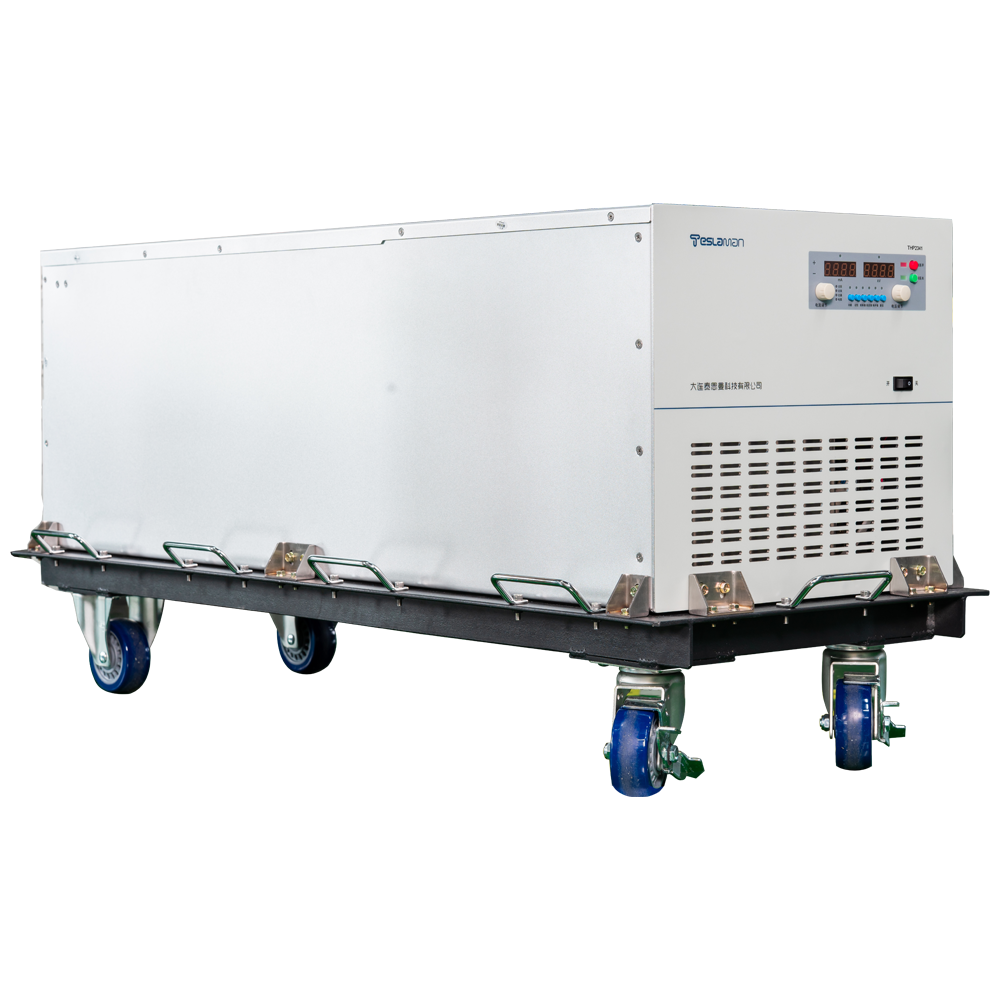
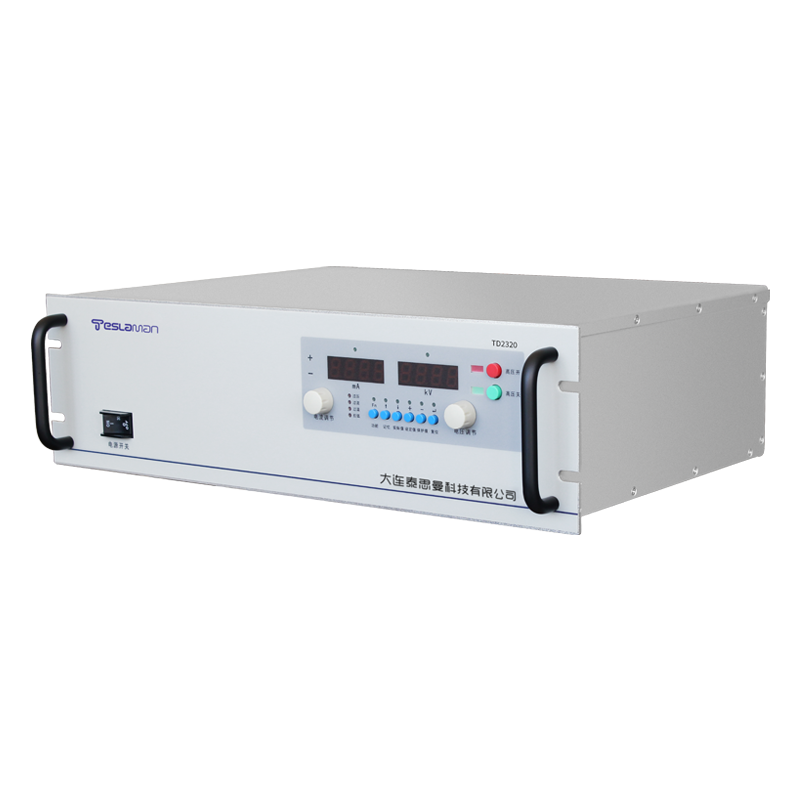
The high voltage bias power supply for dual frequency operation must generate two RF signals with independent amplitude and power control. The two signals are combined and applied to the substrate electrode. The power supply must provide the required frequencies, amplitudes, and power levels for the etching process.
Frequency selection for dual frequency bias depends on the plasma characteristics and the desired control separation. The low frequency must be low enough that ions respond to the instantaneous voltage, typically below the ion plasma frequency. The high frequency must be high enough that ions do not respond to the instantaneous voltage, typically above the ion plasma frequency but below the electron plasma frequency. The frequency separation must be adequate to achieve independent control.
Amplitude control of the low frequency determines the ion energy range. The amplitude must be adjustable to provide the energy range needed for different etching applications. The amplitude precision determines the energy precision. The amplitude stability determines the energy stability during etching.
Power control of the high frequency determines the ion flux range. The power must be adjustable to provide the flux range needed for different etching rates. The power precision determines the flux precision. The power stability determines the flux stability during etching.
Signal combining for dual frequency bias must combine the two frequencies without interference or distortion. The combining circuit must handle both frequencies with appropriate impedance matching. The combined signal must maintain the characteristics of both components. The combining must not introduce harmonics or intermodulation that could affect the plasma.
Impedance matching for dual frequency bias must match both frequencies to the plasma load. The plasma impedance differs at different frequencies, requiring different matching networks. Dual matching networks or broadband matching can provide appropriate matching at both frequencies. The matching must maintain efficient power transfer at both frequencies.
Process optimization using dual frequency bias adjusts the low frequency amplitude and the high frequency power to achieve optimal etching results. The optimization finds the combination that provides the required etching rate with the required etching quality. The independent control enables optimization that would not be possible with coupled single frequency bias.