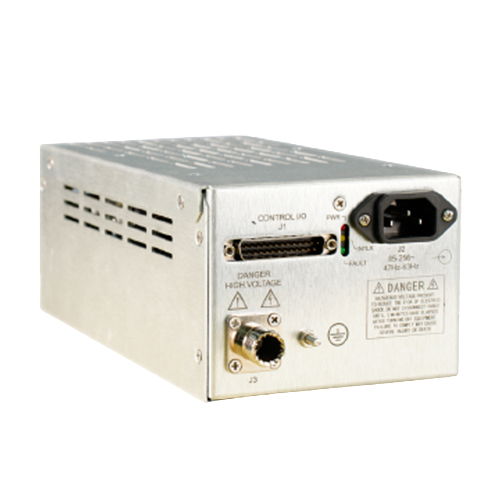
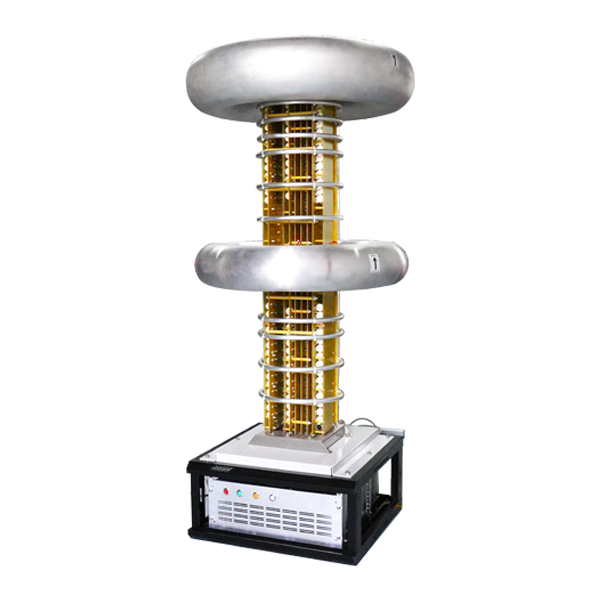
Ion Transmission Efficiency Analysis of Positive Negative High Voltage Fast Switching Power Supply for Differential Ion Mobility Spectrometry
Differential ion mobility spectrometry has emerged as a powerful analytical technique for separating and identifying gas-phase ions based on their mobility differences under varying electric field strengths. The technique relies on rapid switching between high and low electric field conditions, requiring specialized power supplies capable of generating asymmetric waveforms with precise timing and amplitude control. The ion transmission efficiency through the differential mobility separator depends critically on the characteristics of this high voltage switching waveform, making power supply optimization essential for achieving high sensitivity and resolution.
The fundamental operating principle of differential ion mobility spectrometry exploits the nonlinear dependence of ion mobility on electric field strength. Ions experience different effective mobilities under high and low field conditions, and this difference varies between ion species. By applying an asymmetric waveform that alternates between high and low field periods, ions can be separated based on their differential mobility characteristics. The compensation voltage superimposed on the waveform enables selective transmission of specific ion species through the device.
Ion transmission efficiency quantifies the fraction of ions entering the differential mobility separator that successfully traverse the device and reach the detector. Multiple factors influence this efficiency, including waveform characteristics, gas flow dynamics, ion diffusion, and space charge effects. The high voltage power supply waveform parameters directly affect several of these factors, creating opportunities for optimization through careful power supply design.
The waveform amplitude determines the maximum electric field experienced by ions during the high field portion of the cycle. Higher amplitudes increase the differential mobility effect, enhancing separation capability but also increasing the risk of electrical discharge and ion fragmentation. The power supply must generate peak voltages typically ranging from several hundred to several thousand volts while maintaining precise amplitude control and stability.
Switching speed between high and low field states impacts ion transmission through several mechanisms. Faster switching enables more separation cycles per unit time, potentially improving resolution and throughput. However, rapid switching generates electromagnetic interference and places demanding requirements on power supply bandwidth. The transition between field states must be sufficiently fast that ions do not significantly change position during the transition, maintaining the separation effect.
Waveform symmetry affects the net ion displacement per cycle and the required compensation voltage. Ideally, the waveform should have zero net area over one complete cycle to prevent ion drift in the absence of differential mobility effects. Any asymmetry in the waveform shape introduces systematic errors in the compensation voltage required for ion transmission. Power supplies must generate waveforms with carefully controlled symmetry characteristics.
The rise and fall times of the voltage transitions influence ion behavior during the switching periods. Slower transitions allow ions to experience intermediate field conditions that may not contribute effectively to separation. Very fast transitions may generate electromagnetic interference that couples into sensitive detection circuits. Optimal transition times balance separation efficiency against electromagnetic compatibility requirements.
High voltage generation for differential ion mobility spectrometry typically employs resonant or switching converter topologies. These converters must operate at frequencies compatible with the required waveform switching rates, often in the megahertz range for high-performance applications. The converter design must minimize output impedance across the frequency range of interest to maintain waveform fidelity under varying load conditions.
The capacitive load presented by the differential mobility separator electrodes challenges conventional power supply designs. Rapid voltage changes require substantial current flow to charge and discharge the electrode capacitance. Power supplies must provide adequate peak current capability while maintaining voltage accuracy during the constant voltage portions of the waveform. Specialized output stages using high-speed semiconductor switches enable the required current delivery.
Thermal management in fast switching high voltage power supplies presents unique challenges. Switching losses in semiconductor devices increase with operating frequency, generating heat that must be dissipated efficiently. High voltage isolation requirements complicate thermal design by limiting the thermal paths available for heat removal. Advanced thermal management techniques including heat pipes, liquid cooling, and optimized component placement enable reliable operation at high switching frequencies.
Electromagnetic interference generated by fast voltage transitions can couple into sensitive ion detection circuits, degrading signal-to-noise ratio and measurement accuracy. Shielding, filtering, and careful layout minimize interference generation and propagation. Differential signaling techniques reduce radiated emissions by canceling electromagnetic fields from opposing current paths. Spread spectrum techniques can distribute interference energy across a wider frequency range, reducing peak emissions at any single frequency.
Voltage monitoring and feedback control enable waveform accuracy and stability. High voltage probes with fast response times measure the actual waveform at the separator electrodes, providing feedback for closed-loop control. The control system must have sufficient bandwidth to correct waveform errors within the switching cycle period. Digital control systems using high-speed analog-to-digital converters and field programmable gate arrays enable sophisticated waveform synthesis and correction algorithms.
The relationship between waveform parameters and ion transmission efficiency can be characterized through systematic experimentation. Varying amplitude, frequency, duty cycle, and waveform shape while measuring ion signal intensity reveals the optimal operating conditions for different ion species. These characterization studies inform power supply design requirements and enable application-specific optimization.
Ion loss mechanisms in differential mobility separators include diffusion to electrode surfaces, neutralization through ion-molecule reactions, and space charge repulsion. The waveform characteristics influence these loss mechanisms through their effects on ion trajectories and residence times. Higher field strengths during the high voltage portion of the cycle can increase ion velocities, reducing residence time and associated losses. However, excessive field strengths may cause ion heating and fragmentation.
Space charge effects become significant at high ion concentrations, where mutual repulsion between ions causes trajectory deviations that reduce transmission efficiency. The waveform parameters influence space charge effects through their impact on ion density distribution within the separator. Optimized waveforms can distribute ions more uniformly, reducing local space charge density and its associated transmission losses.
Gas composition and pressure in the differential mobility separator influence ion mobility and optimal waveform parameters. Higher pressures increase collision frequency between ions and neutral molecules, affecting mobility values and differential mobility characteristics. The power supply waveform may need adjustment for operation at different pressures to maintain optimal transmission efficiency. Programmable power supplies enable waveform optimization for various operating conditions.
Temperature effects on ion mobility and differential mobility characteristics require consideration in power supply design. Ion mobility generally decreases with increasing temperature due to increased collision frequency with neutral molecules. The differential mobility effect may also change with temperature, requiring waveform adjustment to maintain optimal separation. Temperature compensation algorithms can automatically adjust waveform parameters based on measured temperature.
Long-term stability of waveform parameters affects measurement reproducibility and calibration requirements. Drift in amplitude, frequency, or symmetry characteristics can cause changes in ion transmission efficiency that may be misinterpreted as changes in sample composition. Power supplies with stable references and low drift specifications minimize calibration frequency and improve measurement reliability.
Integration of differential ion mobility spectrometry with mass spectrometry creates additional power supply requirements. The differential mobility separator often operates at different potentials than the mass spectrometer interface, requiring careful coordination of voltage levels and isolation. Fast switching waveforms must not interfere with mass spectrometer operation through electromagnetic coupling or ground loops.
Continued development of differential ion mobility spectrometry applications drives ongoing advancement in high voltage switching power supply technology. Higher switching frequencies, improved waveform fidelity, and enhanced stability enable better separation performance and new analytical capabilities. The tight coupling between power supply characteristics and ion transmission efficiency ensures that power supply optimization remains central to differential mobility spectrometry advancement.