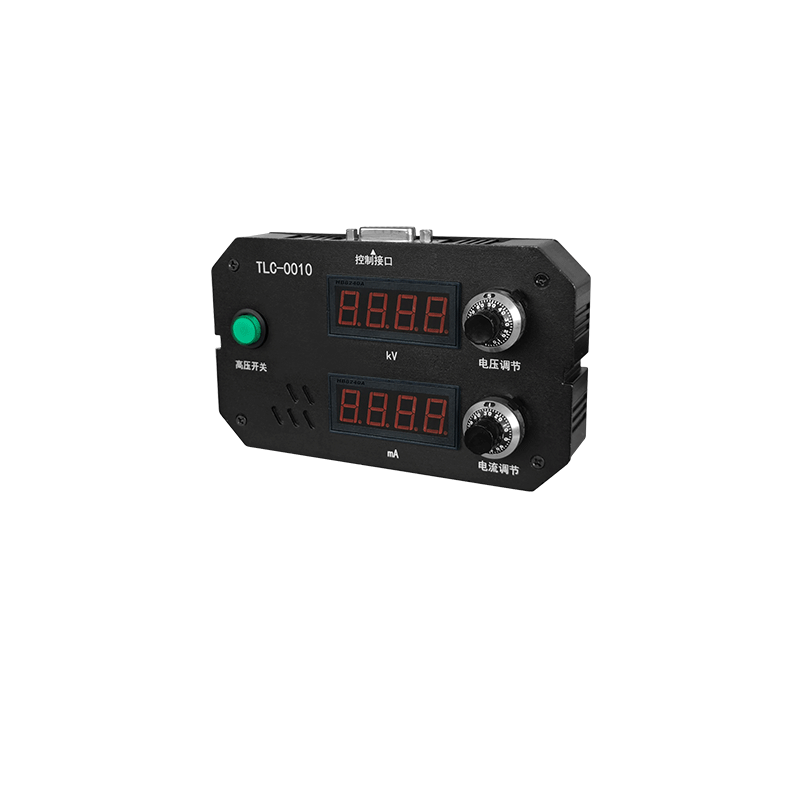
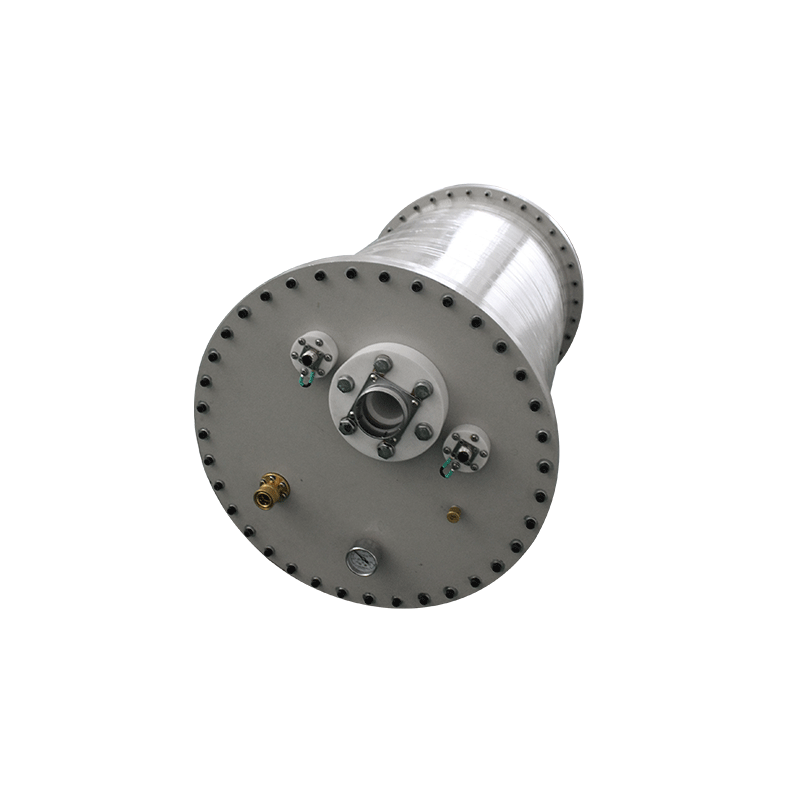
Industrial Directed Energy Equipment High Voltage Power Supply Modular Redundant Design
Industrial directed energy equipment applications demand exceptional reliability from high voltage power supply systems, where equipment failures can result in costly production interruptions or safety hazards. Modular redundant design approaches provide the reliability required for continuous industrial operation while enabling efficient maintenance and capacity scaling. Implementation of these design strategies requires careful consideration of reliability engineering principles, system architecture options, and operational requirements spanning electrical engineering, systems engineering, and manufacturing operations. The cost of downtime in industrial applications drives the need for highly reliable power supply systems. Economic analysis has demonstrated that redundant power supply configurations provide significant return on investment in high-value industrial applications.
Reliability fundamentals for high voltage power supplies establish the baseline performance that redundancy strategies must improve upon, where individual power supply reliability depends on component failure rates following characteristic statistical distributions. Component failure rates typically follow bathtub curves with higher failure rates during early life and wear-out phases, with relatively constant failure rates during the useful life period. The constant failure rate during useful life enables straightforward reliability prediction using exponential distribution mathematics and supports quantitative reliability engineering analysis. Understanding reliability fundamentals is essential for designing effective redundancy strategies. Reliability modeling has become an essential tool for optimizing redundant system design.
Mean time between failures specifications for industrial power supplies typically range from 50,000 to 500,000 hours depending on design quality and operating conditions, while application reliability requirements may demand mean time between failures exceeding one million hours for critical industrial processes. Achievement of such high reliability levels through component improvement alone becomes prohibitively expensive, making redundant system architectures a more cost-effective approach to achieving required system-level reliability through fault tolerance rather than component perfection. Redundancy provides a systematic approach to achieving high system-level reliability. Trade-off analysis between component improvement and redundancy has shown redundancy to be more cost-effective for high-reliability applications.
Parallel redundancy configurations connect multiple power supply modules to share the load current while providing backup capability following individual module failures, where two-module parallel configurations provide single-fault tolerance and maintain operation despite one module failure while three-module configurations provide double-fault tolerance. Current sharing control ensures equal load distribution among active modules and prevents any single module from experiencing excessive thermal stress that would accelerate aging and reduce overall system reliability. Current sharing is essential for achieving the reliability benefits of parallel redundancy. Advanced current sharing algorithms employing active balancing have significantly improved parallel system performance.
Hot-standby redundancy configurations maintain backup modules in ready condition without sharing load current during normal operation, where detection of active module failure triggers automatic transfer to the standby module. This approach avoids the current sharing complexity of parallel configurations while providing equivalent fault tolerance, with transition time between failure detection and standby activation being short enough to prevent process interruption for most industrial applications. Hot-standby configurations offer advantages in applications where current sharing is problematic. Hybrid configurations combining parallel and standby approaches have proven effective for applications requiring both high reliability and high availability.
N-plus-one redundancy terminology describes systems where N modules provide the required capacity and one additional module provides backup capability, while N-plus-two configurations provide two backup modules for applications requiring higher reliability. Economic optimization of redundancy level balances the cost of additional modules against the expected cost of downtime events avoided through improved reliability, with quantitative analysis enabling optimal trade-off between capital cost and operational risk. The optimal redundancy level depends on the cost of downtime and the probability of multiple simultaneous failures. Sophisticated economic models have been developed to optimize redundancy levels for specific application requirements.
Modular architecture advantages extend beyond reliability improvement to encompass maintenance and capacity scaling benefits, where failed modules can be replaced without shutting down the entire system in redundant configurations. Hot-swap capability enables module replacement while the system continues operating on remaining modules, while capacity scaling through module addition provides flexibility to accommodate changing power requirements without complete system replacement and significantly reduces system upgrade costs. Modular architecture provides operational flexibility beyond reliability improvement. The combination of redundancy and modularity has proven particularly valuable for applications with evolving power requirements.
Module design considerations for redundant systems must address both electrical and mechanical interoperability requirements, where output voltage matching between modules ensures proper current sharing and prevents circulating currents that cause efficiency loss and thermal stress. Mechanical form factor standardization enables interchangeability of modules from different production lots or manufacturers, while connector designs must accommodate repeated insertion and removal cycles without degradation in electrical performance. Interoperability is essential for realizing the benefits of modular architecture. Standardization of module interfaces has enabled development of cost-effective redundant power supply systems.
Fault detection and isolation systems must rapidly identify failed modules and disconnect them from the shared bus to prevent fault propagation, where output voltage monitoring detects regulation failures that could cause overvoltage or undervoltage conditions. Current monitoring detects both overcurrent and undercurrent conditions that indicate module degradation or failure, while temperature monitoring identifies thermal abnormalities that precede component failures and enable predictive maintenance intervention. Comprehensive monitoring is essential for detecting and isolating faults before they affect system operation. Advanced fault detection algorithms employing pattern recognition have significantly improved fault detection speed and accuracy.
Automatic transfer switching between active and standby modules must occur within time intervals specified by process continuity requirements, where detection delay, logic processing time, and switch actuation time combine to determine total transfer time. Solid-state switching elements enable transfer times below one millisecond and satisfy most industrial application requirements, while mechanical relay switching provides lower cost but longer transfer times that may not meet stringent continuity requirements. Transfer time requirements drive the selection of switching technology. Hybrid switching approaches combining solid-state and mechanical elements have been developed for applications requiring both fast transfer and high current capability.
Maintenance strategies for redundant power supplies must preserve system reliability during maintenance activities, where online maintenance procedures enable module replacement without system shutdown and predictive maintenance programs based on condition monitoring data enable scheduled replacement of modules showing degradation trends before actual failure occurs. Spares inventory management ensures replacement modules are available when needed while minimizing inventory holding costs and optimizing the trade-off between inventory investment and maintenance response time. Effective maintenance strategies maximize system availability while minimizing maintenance cost. Integration of maintenance management systems with power supply monitoring has enabled significant improvements in maintenance efficiency.
Testing and verification of redundant power supply systems must validate both normal operation and fault response characteristics, where load testing confirms adequate capacity under maximum load conditions while fault injection testing verifies proper detection and isolation of simulated module failures. Transfer testing confirms successful transition to backup modules within specified time limits, while environmental testing verifies reliable operation across the specified temperature, humidity, and vibration ranges representative of actual installation conditions. Comprehensive testing ensures that redundant systems meet their reliability objectives. Accelerated life testing protocols have been developed specifically for redundant power supply systems to verify reliability performance.