Independent Controllable High-Voltage Module for Multi-Needle Electrospinning
Electrospinning is a versatile technique for producing micro- and nanoscale fibrous mats from polymer solutions. Scaling up from a single needle to a multi-needle array is essential for industrial throughput but introduces the problem of jet interference due to the repulsive Coulombic forces between neighboring charged jets. This leads to poor deposition uniformity and compromised fiber morphology. The solution lies in decoupling the electrostatic fields of each needle through the use of independent, controllable high-voltage modules, transforming a chaotic multi-jet system into a stable, scalable production tool.
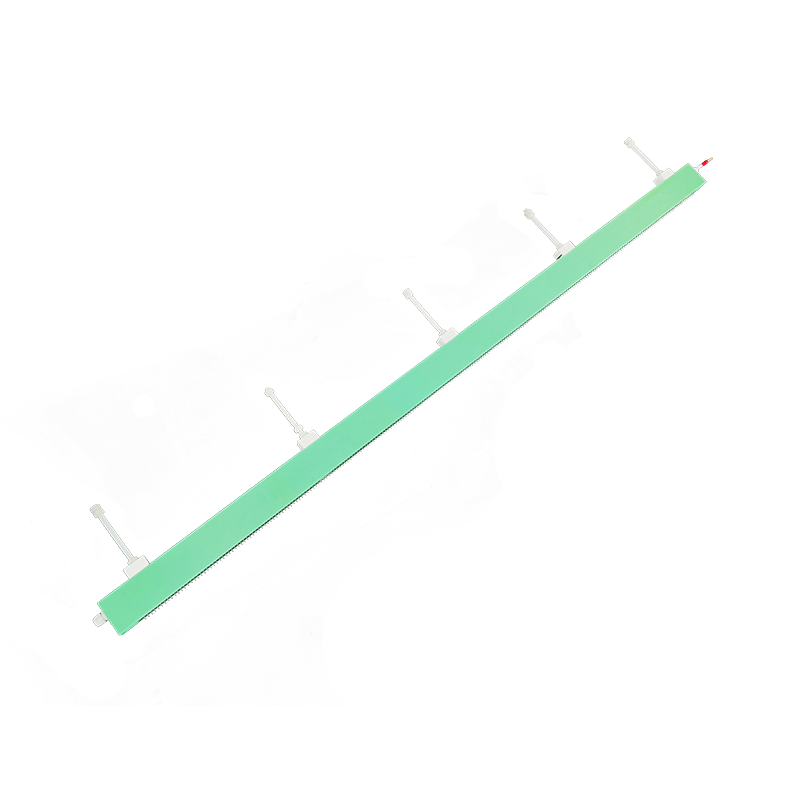
In a conventional multi-needle setup, all needles are connected to a single high-voltage power supply. They share a common electrical potential, typically in the range of 5 to 30 kV. The electric field from each needle is not isolated; the mutual repulsion between the similarly charged jets causes them to splay outward, creating a wide, non-uniform deposition pattern and often preventing jet initiation from inner needles altogether. An independent module architecture assigns a dedicated high-voltage output channel to each needle or a small group of needles. Each channel is electrically isolated from the others and can be controlled independently in terms of voltage, polarity, and even temporal modulation.
This independence allows for several critical compensation strategies. The most straightforward is voltage gradient compensation. Needles at the edges of an array experience a different fringe field environment compared to those in the center. By independently tuning the voltage applied to each needle—slightly lowering the voltage for edge needles and raising it for center needles—the electric field strength at the tip of each needle can be equalized. This promotes simultaneous jet initiation and results in parallel, stable jets with minimal mutual repulsion, leading to a uniform mat. The high-voltage modules must provide fine voltage resolution, often down to 10-volt steps, to make these subtle adjustments.
Beyond static voltage adjustment, independent control enables active stabilization techniques. Each jet can be monitored, for instance, by a simple optical sensor detecting the Taylor cone. If a jet from a particular needle shows signs of instability or dripping, the control system can momentarily modulate the voltage for that specific channel—applying a small pulse or a brief reduction—to restore stable operation without affecting the neighboring jets. This requires modules with fast response times and the ability to accept analog or high-speed digital modulation inputs.
The architecture also opens the door to advanced processing concepts. For producing patterned or graded nanofiber mats, different needles can be loaded with different polymer solutions. By independently controlling which needles are activated (i.e., which have high voltage applied) as the collector stage moves, one can deposit fibers in a predefined pattern. Similarly, for creating core-shell or Janus fibers using coaxial needle setups, the independent high-voltage control of the inner and outer fluid channels provides a new degree of freedom to manipulate the compound jet's stability and morphology. In some designs, the collector itself may be segmented with independently biased sections to further guide and control fiber deposition.
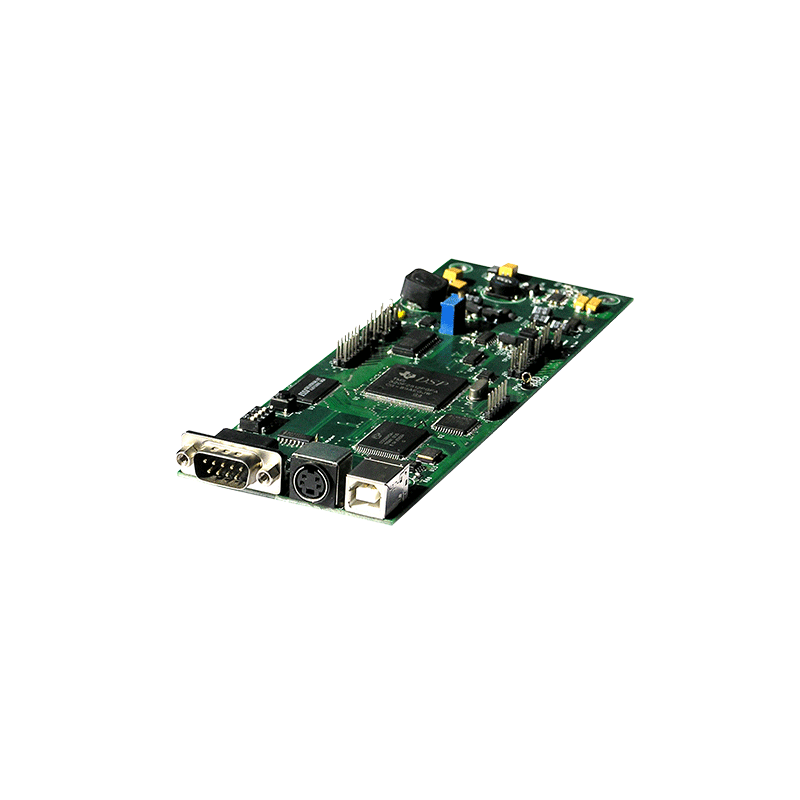
Designing such a multi-channel high-voltage system presents significant engineering challenges. The primary requirement is complete electrical isolation between channels to prevent any cross-talk that would defeat the purpose of independence. This often means each channel has its own isolated DC-DC converter, fed from a common low-voltage bus via isolation transformers. The control signals for each channel must also be isolated, typically using digital isolators or fiber-optic links. The physical packaging must prevent corona discharge or arcing between the closely spaced high-voltage outputs, necessitating generous creepage and clearance distances, and possibly the use of dielectric encapsulation.
Reliability and safety are paramount. The system must include individual current monitoring for each channel to detect needle clogs or short circuits and shut down the affected channel only. The user interface must allow for easy configuration of voltage profiles for different array geometries and materials. By providing this level of precise, individualized electrostatic control, the multi-needle independent high-voltage module overcomes the fundamental scaling limitation of electrospinning, enabling the high-rate, uniform production of nanofibers for applications ranging from high-performance filtration and tissue engineering scaffolds to wearable electronics and energy storage devices.