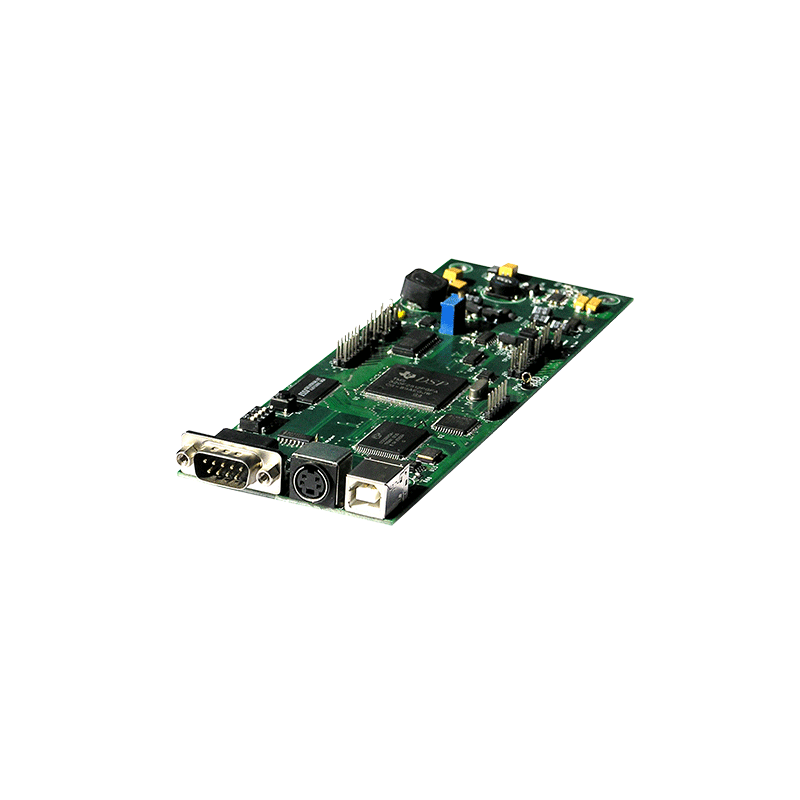
Coupling Relationship Between Output Voltage and Wafer Temperature of Electrostatic Chuck High Voltage Power Supply
Electrostatic chucks are widely used in semiconductor manufacturing to hold wafers during plasma processing. The wafer temperature affects the processing results, and the electrostatic force must be controlled accordingly. The output voltage of the high voltage power supply and the wafer temperature have a coupling relationship that affects process control. Understanding this relationship enables optimization of chucking and temperature control. This knowledge is important for advanced semiconductor processes.
The electrical requirements for electrostatic chuck power supplies depend on the chuck type and wafer size. Coulomb-type chucks use DC voltage to create electrostatic attraction. Johnsen-Rahbek chucks use combined electrostatic and van der Waals forces. Both types require precise voltage control. The wafer temperature affects the force generation. The power supply must account for this relationship.
Electrostatic force generation depends on voltage and dielectric properties. The force is proportional to the square of the voltage and depends on the dielectric constant. The dielectric constant of materials changes with temperature. This causes the force to vary with temperature. The power supply must compensate for this effect.
Wafer temperature control uses backside gas and electrostatic force. Helium backside gas transfers heat between the chuck and wafer. The electrostatic force affects the thermal contact. Higher force improves thermal transfer. The coupling between voltage and temperature must be managed.
Temperature measurement enables closed-loop control. Temperature sensors in the chuck measure the wafer temperature. The control system adjusts voltage and coolant temperature. The coupling relationship affects the control dynamics. Understanding the coupling improves control performance.
Process requirements drive the coupling optimization. Different processes need different wafer temperatures. The chucking force must be sufficient at the process temperature. The power supply must provide appropriate voltage for each condition. The optimization considers both chucking and temperature.
Dynamic effects add complexity to the coupling. Temperature changes during processing affect force. Plasma ignition can cause thermal transients. The control must respond to these changes. Fast control loops improve dynamic performance.
Thermal expansion affects chuck flatness and force distribution. Temperature gradients cause non-uniform expansion. This affects the force distribution across the wafer. The power supply may adjust voltage to compensate. This adds another layer to the coupling.
Material properties change with temperature. The dielectric constant of chuck materials varies with temperature. The resistivity changes affect charge dissipation. These changes affect the chucking behavior. The power supply must accommodate these variations.
Energy consumption relates to the coupling. Higher voltages consume more power. The temperature control also consumes power. The optimization balances performance and efficiency. The coupling affects the overall system efficiency.
Reliability considerations include temperature and voltage stress. High temperatures accelerate component aging. High voltages stress the dielectric. The operating points must consider reliability. The coupling affects the lifetime.
Diagnostics help understand the coupling. Monitoring voltage, current, and temperature reveals relationships. The data supports model development. Models predict behavior for new conditions. The diagnostics enable continuous improvement.
Future chuck developments will intensify coupling considerations. Advanced processes demand tighter temperature control. Higher forces require higher voltages. The power supply technology must advance to support these requirements.