Parameter Optimization Method for High Voltage Power Supply in Ancient Ceramic Glaze Composition Electrostatic Excitation Characterization
Ancient ceramic artifacts represent invaluable cultural heritage that provides insights into historical manufacturing techniques, trade relationships, and artistic development across civilizations. Scientific characterization of ceramic glazes has become essential for archaeological research, conservation practice, and authentication investigations. Electrostatic excitation methods enable non-destructive surface analysis through controlled electrical stimulation that reveals compositional and structural characteristics without sampling or physical contact. High voltage power supply parameters critically influence the excitation effectiveness and the quality of analytical information obtained from these precious artifacts.
The fundamental principle of electrostatic excitation characterization involves applying controlled electric fields to ceramic surfaces to induce measurable responses related to material properties. The electric field interacts with surface materials through mechanisms including charge injection, polarization, and surface potential development that depend on elemental composition, crystalline structure, and surface condition. Analysis of the excitation response provides information about glaze composition, firing conditions, and alteration products. The non-contact nature of electrostatic methods preserves artifact integrity while enabling surface characterization.
Glaze composition characterization objectives vary depending on research questions and conservation needs. Elemental composition analysis identifies the raw materials used in glaze formulation, providing information about technological choices and material sources. Structural analysis reveals crystalline phases and microstructural features that indicate firing temperatures and cooling regimes. Surface condition assessment evaluates weathering, alteration, and conservation treatment effects. The characterization must be tailored to specific investigation objectives.
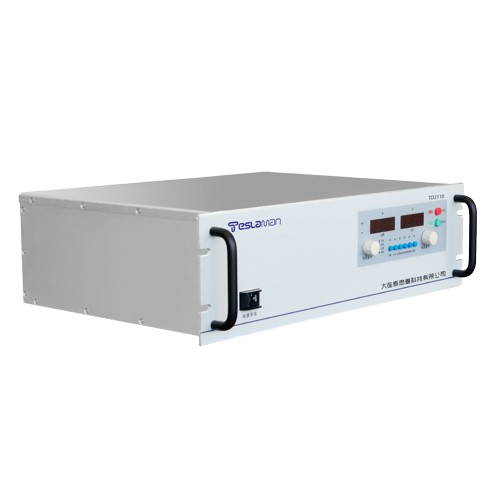
High voltage excitation parameters determine the nature and intensity of surface interaction with critical implications for both analytical effectiveness and artifact safety. Voltage level affects field strength and consequently the intensity of induced surface responses. Higher voltages produce stronger excitation signals that may reveal more detailed compositional information but increase the risk of surface stress or unwanted side effects. Lower voltages provide gentler excitation that minimizes risk but may limit analytical sensitivity. Optimization must balance information quality against preservation requirements.
Pulse duration optimization addresses the temporal aspects of excitation and surface response development. Shorter pulses provide brief excitation that limits cumulative energy deposition but may not allow full development of surface responses. Longer pulses enable more complete response evolution but increase cumulative energy exposure. The pulse duration must be optimized to capture the desired response characteristics while minimizing energy exposure to sensitive artifacts.
Pulse frequency or repetition rate optimization considers the effects of repeated excitation on surface behavior. Higher repetition rates enable more rapid data acquisition but may cause cumulative effects or sample heating. Lower repetition rates provide extended recovery time between pulses but slow the measurement process. The frequency selection must account for surface response dynamics and artifact thermal sensitivity.
Glaze material characteristics significantly influence optimal excitation parameters through their electrical and thermal properties. Different glaze compositions exhibit varying electrical conductivity, dielectric constant, and thermal conductivity that affect excitation response. Historical manufacturing variations across different periods and regions create diverse glaze characteristics requiring parameter adaptation. The optimization approach must accommodate the wide range of material properties encountered across ceramic collections.
Surface condition effects on excitation response reflect the preservation state and alteration history of ceramic artifacts. Well-preserved glazes may exhibit clearer, more reproducible responses to electrostatic excitation. Weathered or altered surfaces may show modified responses due to surface contamination, degradation products, or previous conservation treatments. The optimization must account for surface condition variability within and between artifacts.
Environmental factors affect excitation effectiveness through their influence on surface electrical properties and charge behavior. Temperature affects both material electrical properties and artifact thermal sensitivity. Humidity influences surface conductivity and charge dissipation rates. Environmental control during measurement ensures reproducible conditions for reliable characterization results.
Integration with complementary analytical techniques enables comprehensive artifact characterization beyond electrostatic excitation alone. Spectroscopic methods such as X-ray fluorescence or Raman spectroscopy provide elemental and molecular information that complements electrostatic data. Microscopy techniques reveal surface morphology and microstructure that inform excitation response interpretation. The integration of multiple techniques provides more complete characterization than any single method.
Response measurement systems capture the electrostatic excitation effects for analysis and interpretation. Electrical measurement techniques characterize induced currents, voltages, and impedance changes during excitation. Optical measurement techniques may capture luminescence or other light emission associated with excitation. The measurement system must provide adequate sensitivity, bandwidth, and spatial resolution for the characterization objectives.
Data analysis algorithms extract compositional and structural information from excitation response measurements. Pattern recognition algorithms identify characteristic response signatures associated with specific materials or conditions. Statistical analysis algorithms compare measurements across artifacts to identify groups and relationships. Machine learning approaches can discover complex relationships between excitation responses and material properties from training datasets.
Calibration procedures establish quantitative relationships between excitation parameters, measured responses, and material properties. Reference materials with known compositions enable calibration of response-property relationships under controlled conditions. Archaeological reference collections provide application-specific calibration for authentic ancient materials. The calibration must account for the unique characteristics of electrostatic excitation responses.
Testing and verification of parameter optimization require evaluation across diverse ceramic types and preservation conditions. Testing with various glaze compositions verifies optimization robustness across material variations. Testing with different surface conditions verifies parameter adaptability to preservation states. Comparative testing with established analytical methods verifies information quality. The verification program must establish confidence in optimized parameters for reliable characterization.
Conservation ethics and artifact safety impose strict constraints on acceptable excitation parameters. Non-destructive analysis requirements prohibit any excitation that causes detectable changes to artifact appearance or structure. Minimal intervention principles favor the gentlest excitation that achieves characterization objectives. The optimization must respect conservation requirements as primary constraints on parameter selection.
Integration with archaeological workflows requires compatibility with museum and laboratory practices. The measurement system must accommodate artifact handling requirements and safety protocols. The characterization timing must fit within examination schedules and research programs. The parameter settings must be documented for reproducibility and result interpretation.
Continued advancement in cultural heritage science drives ongoing development of electrostatic characterization methods. Better understanding of excitation mechanisms enables more informed parameter optimization. Advanced measurement technologies enable more detailed response characterization. Machine learning algorithms enable more sophisticated data analysis. These developments continue advancing the capabilities of non-destructive characterization for ancient ceramic glazes and other cultural heritage materials.